
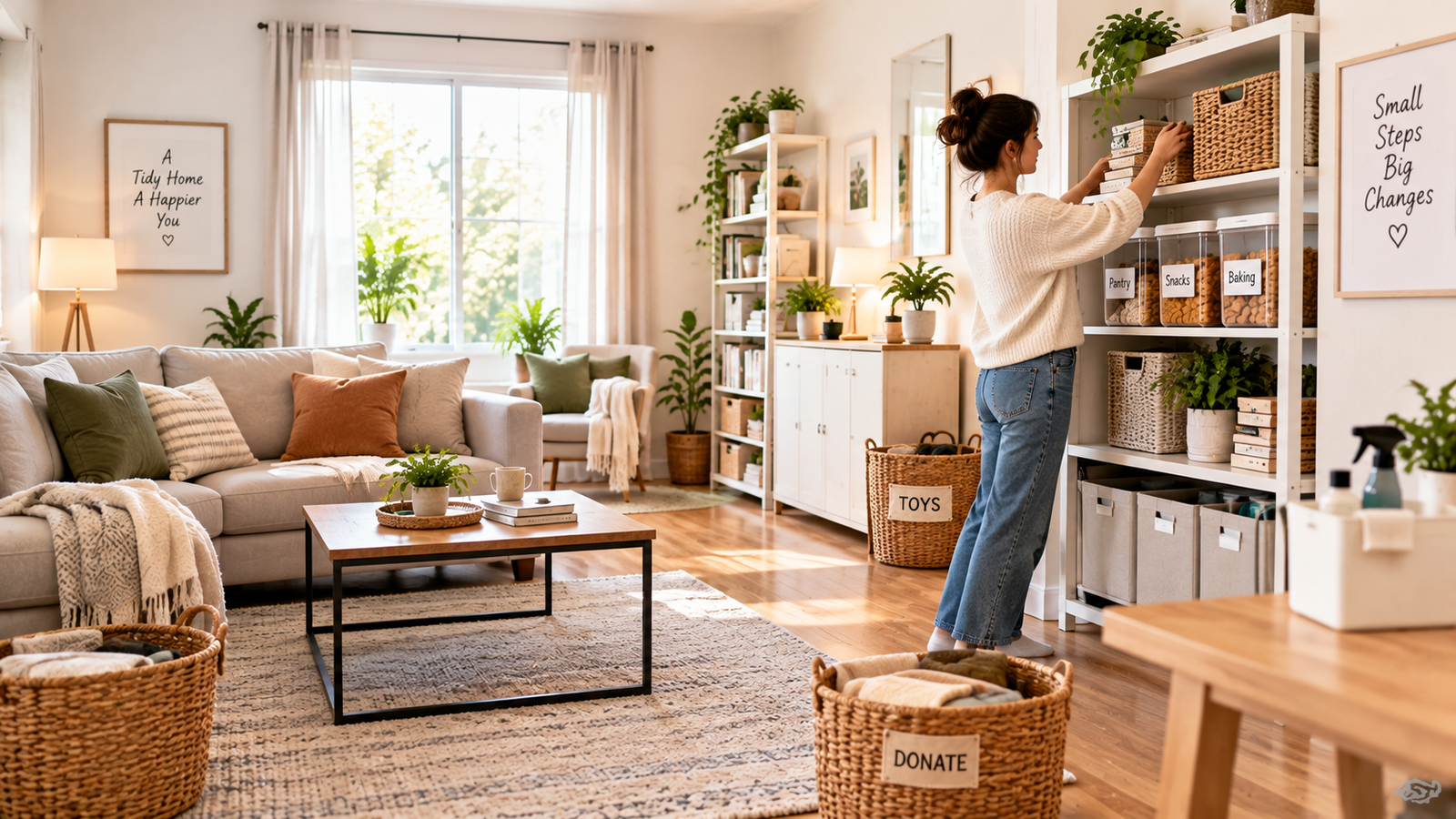
Keeping your home organized can make everyday life easier and more comfortable. A tidy home is not only easier to clean, but it can also help you find things quickly and make better use of the space you have.
However, organizing an entire home can feel overwhelming if you try to do everything at once. The best approach is to work step by step, starting with small areas and gradually building better habits.
Whether you live in a small apartment, a large house, or a shared home, these simple steps can help you create a cleaner and more organized space.
1. Start With One Room
The first step is to avoid trying to organize the entire house at once.
Choose one room or one small area to begin with. It could be your bedroom, kitchen, living room, or even a single closet.
Starting small makes the process easier and gives you a clear goal.
Once you finish one area, you can move to the next.
2. Remove Everything You Do Not Need
Before organizing your belongings, take some time to declutter.
Look at each item and ask yourself whether you actually use it or need it.
Create separate groups for items you want to keep, donate, sell, recycle, or discard.
Removing unnecessary items makes organization much easier because you will have fewer things to store.
3. Sort Items Into Categories
After decluttering, group similar items together.
For example, in a bedroom you could create categories for clothing, shoes, accessories, books, and personal items.
In the kitchen, categories might include cooking tools, dishes, food containers, and cleaning supplies.
Grouping similar items helps you understand how much storage space you actually need.
4. Give Everything a Specific Place
One of the most important organization habits is giving every item a designated home.
Instead of placing objects wherever there is available space, decide where each item should be stored.
For example, keys can have a specific place near the entrance, while cleaning supplies can stay together in one cabinet.
When every item has a home, it becomes easier to keep the house organized.
5. Organize Your Most-Used Items First
Items you use every day should be easy to access.
Keep frequently used kitchen tools in convenient drawers or cabinets. Place everyday clothing where you can reach it quickly.
Less frequently used items can be stored in higher shelves, storage boxes, or other less accessible areas.
This simple approach can make your daily routine more efficient.
6. Use Storage Containers
Storage containers can help keep smaller items organized.
Use baskets, boxes, bins, and drawer organizers for things such as accessories, documents, toys, cables, and household supplies.
Choose containers that fit the available shelves and cabinets.
Labeling containers can also make it easier to find items without searching through everything.
7. Make Use of Vertical Space
Walls can provide valuable storage opportunities.
Install shelves, hooks, pegboards, or wall-mounted organizers where appropriate.
Vertical storage is especially useful in small homes because it provides additional storage without taking up much floor space.
You can use wall space in kitchens, bedrooms, bathrooms, offices, and entryways.
8. Organize the Kitchen
The kitchen is one of the most important areas to organize because it is used frequently.
Start by removing expired food and kitchen items you rarely use.
Group similar items together and keep frequently used tools within easy reach.
Use drawer dividers, shelf organizers, baskets, and containers to make cabinets easier to manage.
Try to keep kitchen counters as clear as possible.
9. Organize Your Bedroom
A bedroom should feel comfortable and relaxing.
Start by organizing clothing, shoes, accessories, and personal belongings.
Remove clothes you no longer wear and arrange the remaining items by type or frequency of use.
Use under-bed storage for seasonal clothing, extra bedding, or other items that do not need to be accessed every day.
Keep surfaces such as nightstands and dressers as clear as possible.
10. Organize the Living Room
The living room can quickly become cluttered because it is often used by everyone in the household.
Create specific places for books, remote controls, electronics, blankets, and other commonly used items.
Storage baskets can be useful for small objects, while shelves and cabinets can keep larger collections organized.
Try to avoid allowing tables and sofas to become permanent storage areas.
11. Organize the Bathroom
Bathrooms often contain many small products.
Group similar items together, such as skincare products, toiletries, towels, and cleaning supplies.
Use small baskets or containers to keep products organized.
Remove empty or expired products regularly to prevent cabinets from becoming overcrowded.
12. Organize Important Documents
Paperwork can quickly create clutter if it is not managed properly.
Create separate folders for important documents such as bills, receipts, warranties, personal records, and household information.
Use clearly labeled folders or files so you can find important documents when needed.
Where appropriate, consider keeping digital copies of important records while following proper security practices.
13. Create a Daily Reset Routine
Once your home is organized, a short daily reset can help maintain it.
Spend around 10 to 15 minutes returning items to their proper places.
Put away clothes, clear surfaces, return dishes to the kitchen, and organize commonly used items.
Small daily actions can prevent clutter from building up again.
14. Follow the One-In, One-Out Rule
A useful way to control clutter is the one-in, one-out rule.
When you buy a new item, consider removing an old item that serves a similar purpose.
For example, if you purchase a new pair of shoes, you could donate a pair you no longer wear.
This habit helps keep the amount of stuff in your home under control.
15. Review Your Home Regularly
Organization is not a one-time project.
Every few months, review your belongings and identify areas that have become cluttered again.
Seasonal changes are a good opportunity to reorganize clothing, storage areas, decorations, and other household items.
Regular reviews help prevent small problems from becoming large organization projects.
A Simple Weekly Home Organization Plan
You do not need to spend an entire weekend organizing your home.
Try assigning a small task to each day.
Monday: Organize one bedroom area.
Tuesday: Clean and organize the kitchen.
Wednesday: Review the bathroom.
Thursday: Organize paperwork and documents.
Friday: Declutter the living room.
Saturday: Review storage areas.
Sunday: Complete a quick home reset.
You can adjust this schedule based on your home and available time.
Common Home Organization Mistakes
One common mistake is buying storage products before decluttering. If you have too many unnecessary items, additional containers may only hide the problem.
Another mistake is trying to organize everything in one day. This can quickly become exhausting.
Some people also create complicated organization systems that are difficult to maintain. A simple system that everyone in the household understands is usually easier to follow.
Finally, avoid keeping items simply because you might use them someday. If something has not been useful for a long time, consider whether it still deserves valuable storage space.
Final Thoughts
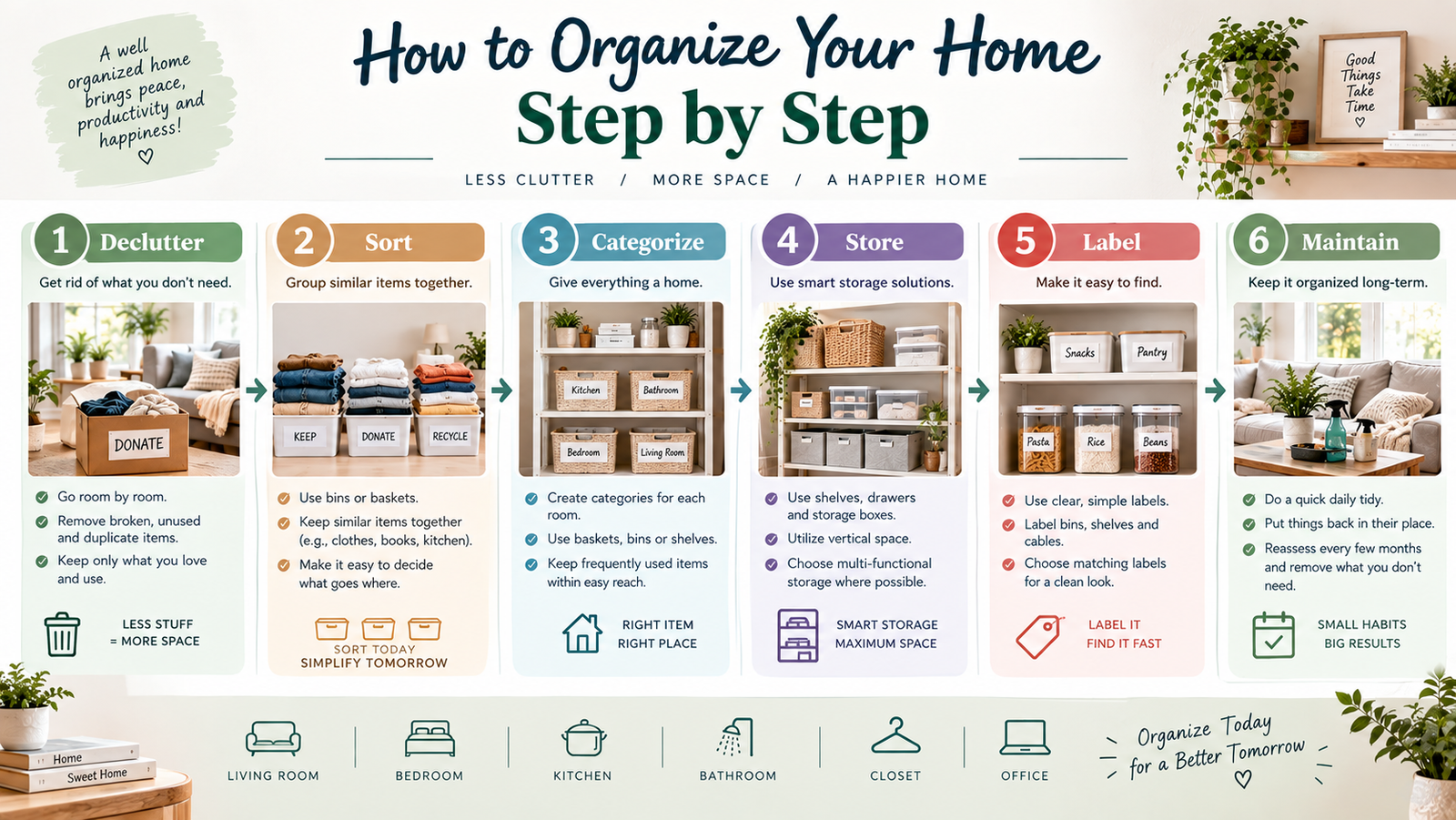
Learning how to organize your home step by step does not have to be difficult. Start with one small area, remove unnecessary items, group similar belongings, and give everything a specific place.
Use practical storage solutions and create simple daily habits to maintain your progress.
The goal is not to create a perfect home. Instead, focus on creating a space that is comfortable, functional, and easy to maintain.
With small improvements made consistently, you can turn an untidy home into a more organized and enjoyable place to live.