
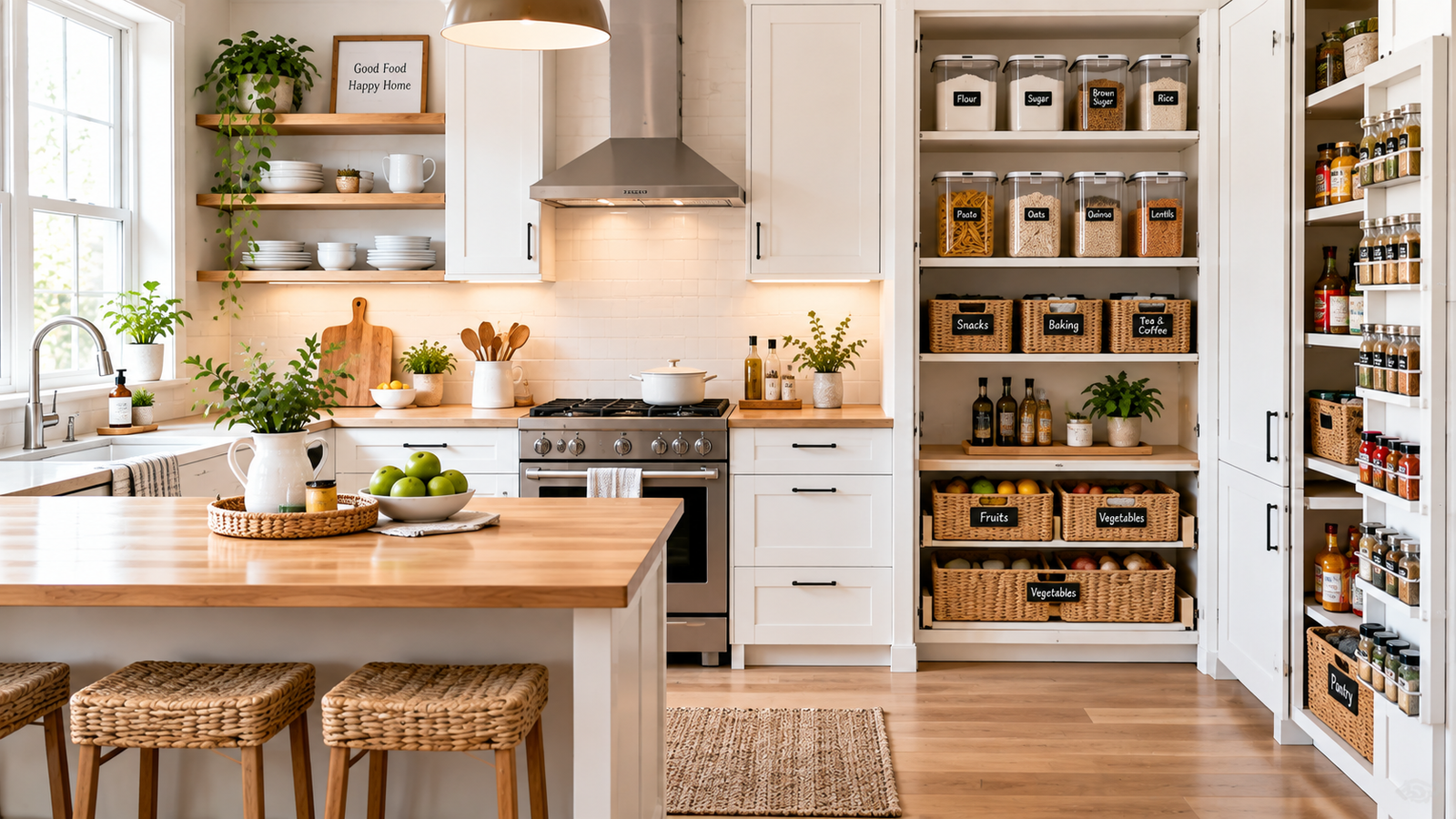
The kitchen is one of the busiest areas in any home. From preparing meals to storing food, washing dishes, and keeping everyday supplies, a kitchen needs to be both functional and organized. When cabinets, drawers, and countertops become cluttered, even simple tasks can feel difficult.
The good news is that you do not need a large kitchen or expensive storage products to create a more organized space. With a few practical changes, you can make better use of your cabinets, drawers, walls, and countertops.
Here are some of the best kitchen organization ideas to help you create a cleaner and more functional kitchen.
1. Declutter Your Kitchen First
Before adding new storage solutions, start by removing items you no longer need.
Look through your cabinets, drawers, pantry, and countertops. Identify duplicate utensils, old containers, unused appliances, and items you rarely use.
Create separate groups for things you want to keep, donate, recycle, or discard.
Decluttering gives you more available storage space and makes the rest of the organization process much easier.
2. Organize Items by Category
Keeping similar items together makes it easier to find what you need.
For example, keep plates together, cooking utensils together, baking supplies together, and food containers in one designated area.
You can also divide your pantry into categories such as grains, snacks, canned foods, spices, and breakfast items.
A simple category system can save time and prevent items from being placed randomly.
3. Use Drawer Dividers
Kitchen drawers can become messy very quickly, especially when utensils are mixed together.
Drawer dividers can separate forks, spoons, knives, cooking tools, and other small items.
You can also use adjustable organizers to customize the available space.
Keeping each type of utensil in its own section makes it easier to find things while cooking.
4. Make Use of Cabinet Doors
The inside of a cabinet door can provide useful additional storage.
You can install suitable racks or organizers for items such as cutting boards, cleaning supplies, measuring tools, or small kitchen accessories.
This allows you to use space that might otherwise remain empty.
Before installing anything, make sure the organizer fits properly and does not prevent the cabinet from closing.
5. Use Vertical Space
Many kitchens have unused vertical space inside cabinets and on walls.
Shelf risers can create additional levels inside cabinets, allowing you to store more plates, cups, or food containers.
Wall-mounted shelves and hooks can also be useful for frequently used items.
Using vertical space is particularly helpful in small kitchens where cabinet and counter space is limited.
6. Organize Your Pantry
A well-organized pantry can make meal preparation much easier.
Start by removing expired food and grouping similar products together.
Use baskets or containers to keep categories separate. For example, one basket can hold snacks while another contains baking supplies.
Clear containers can also make it easier to see how much of an item you have.
Labeling shelves or containers can make the system easier for everyone in the household to maintain.
7. Keep Frequently Used Items Accessible
Items you use every day should be stored where they are easy to reach.
Keep commonly used cooking tools, plates, cups, and ingredients in convenient locations.
Less frequently used items can be placed on higher shelves or in deeper cabinets.
This simple approach can make everyday kitchen tasks faster and more convenient.
8. Organize Food Containers
Food storage containers can take up a surprising amount of cabinet space.
Start by matching containers with their lids and removing damaged or unnecessary pieces.
Store containers inside one another when possible and keep their lids together in a separate organizer.
This prevents the cabinet from becoming a collection of loose containers and missing lids.
9. Create a Spice Organization System
Spices are easier to use when you can quickly see what you have.
Arrange spices alphabetically or group them according to how frequently you use them.
A spice rack, drawer organizer, or suitable shelf system can make access easier.
Check expiration dates occasionally and remove spices that are no longer useful.
10. Keep Countertops Clear
Kitchen countertops often become cluttered with appliances, containers, mail, and other household items.
Try to keep only the appliances and tools you use regularly on the counter.
Store less frequently used appliances in cabinets or another suitable location.
A clear countertop creates more workspace and can make the entire kitchen look cleaner.
11. Use Baskets for Easy Storage
Baskets are useful for grouping items together.
You can use them inside cabinets, pantry shelves, or on open shelves.
For example, one basket can hold cleaning products while another can contain snacks or kitchen towels.
Labeling baskets can make it easier to maintain the organization over time.
12. Create a Dedicated Coffee or Breakfast Area
If you regularly drink coffee or prepare quick breakfasts, consider creating a small dedicated area.
Keep coffee, tea, mugs, sugar, and other related items together.
A dedicated section can prevent these items from spreading across different cabinets and countertops.
The same idea can work for baking supplies or other kitchen activities you perform frequently.
13. Use Hooks for Kitchen Tools
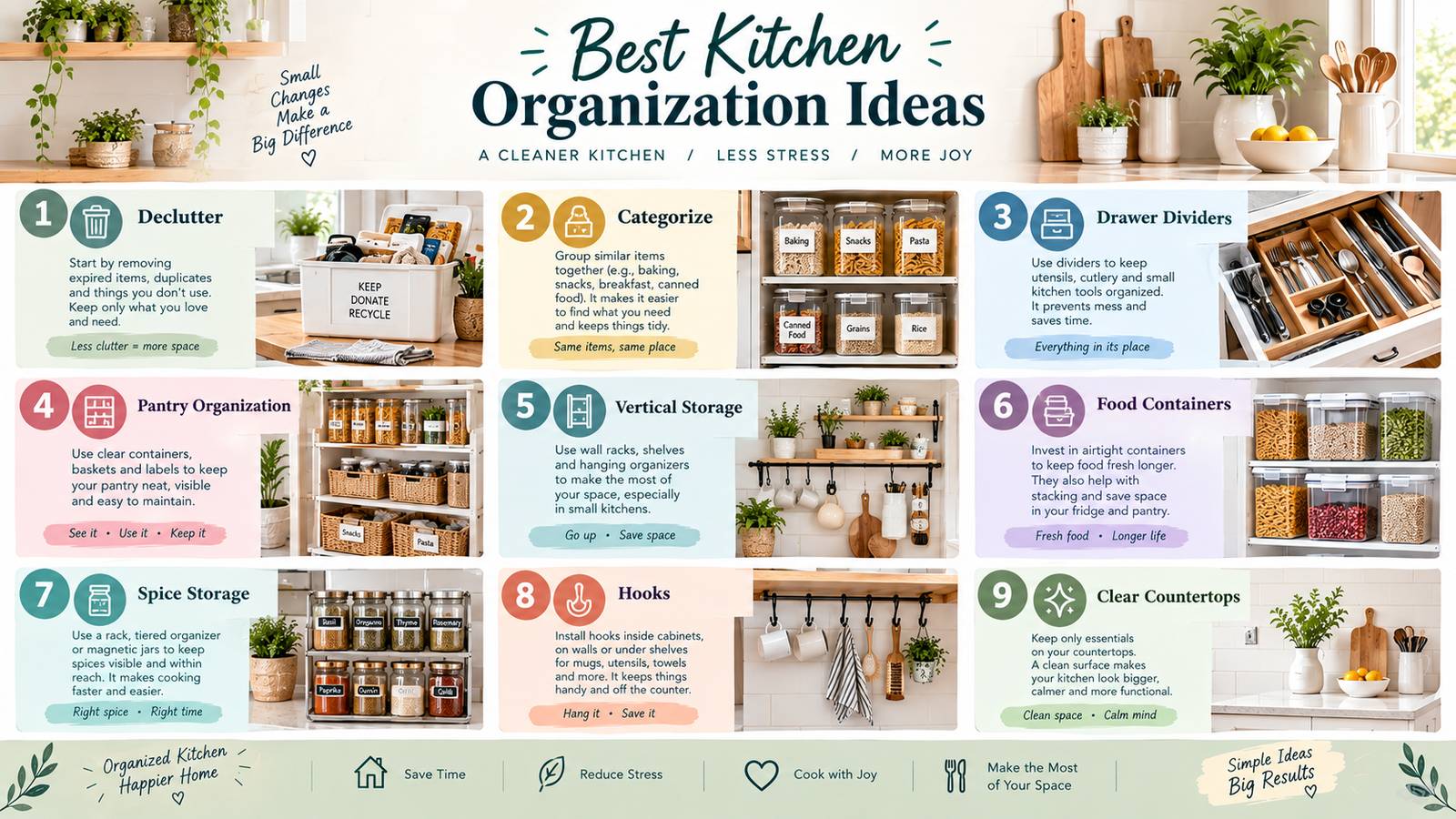
Hooks can provide simple storage for utensils and other kitchen tools.
Depending on your kitchen layout, hooks can be placed under cabinets, on suitable walls, or inside cabinet doors.
They can be useful for items such as measuring cups, cooking utensils, oven gloves, and towels.
This keeps frequently used items accessible without filling drawers.
14. Organize the Refrigerator
Kitchen organization should not stop at cabinets and drawers.
Remove expired food regularly and group similar items together inside the refrigerator.
You can use clear containers or bins to separate fruits, vegetables, drinks, sauces, and other products.
Keep frequently used foods where they are easy to reach.
A clean refrigerator also makes it easier to see what needs to be used before it expires.
15. Make Cleaning Supplies Easy to Find
Kitchen cleaning supplies should have a designated storage location.
Keep items such as sponges, dishwashing supplies, cleaning cloths, and suitable cleaning products together.
Avoid storing cleaning products next to food.
A small organizer under the sink can help keep cleaning supplies separated and easy to access.
How to Organize a Small Kitchen
Small kitchens require careful use of available space.
Start by removing anything you rarely use. Then take advantage of vertical storage, cabinet organizers, hooks, and multifunctional items.
Avoid keeping too many appliances on countertops.
Use drawers and cabinets efficiently by grouping similar items together and adding suitable dividers or shelf risers.
Even a small kitchen can become highly functional when every area has a clear purpose.
Simple Kitchen Organization Routine
Keeping a kitchen organized is easier when you make it part of your routine.
After cooking, return ingredients and tools to their designated locations.
Wipe down countertops and avoid allowing dishes or unnecessary items to accumulate.
Once a week, check your refrigerator and pantry for expired products.
Every few months, review kitchen equipment and remove items you no longer use.
Small regular actions can prevent large organization problems.
Common Kitchen Organization Mistakes
One common mistake is buying storage products before removing unnecessary items. Extra organizers cannot solve a clutter problem if there are simply too many belongings.
Another mistake is storing frequently used items in difficult-to-reach places.
Some people also fill every available space without considering how they will access the items later.
A good organization system should not only look neat but also make everyday tasks easier.
Final Thoughts
An organized kitchen can make cooking, cleaning, and daily routines much easier. You do not need a large kitchen or expensive products to improve your space.
Start by decluttering, grouping similar items, and giving everything a specific place. Then use drawer dividers, baskets, shelves, hooks, and cabinet organizers where they provide real value.
Focus on making the kitchen practical rather than simply making it look organized. With a few simple habits and smart storage ideas, you can create a cleaner, more functional kitchen that is easier to maintain.