
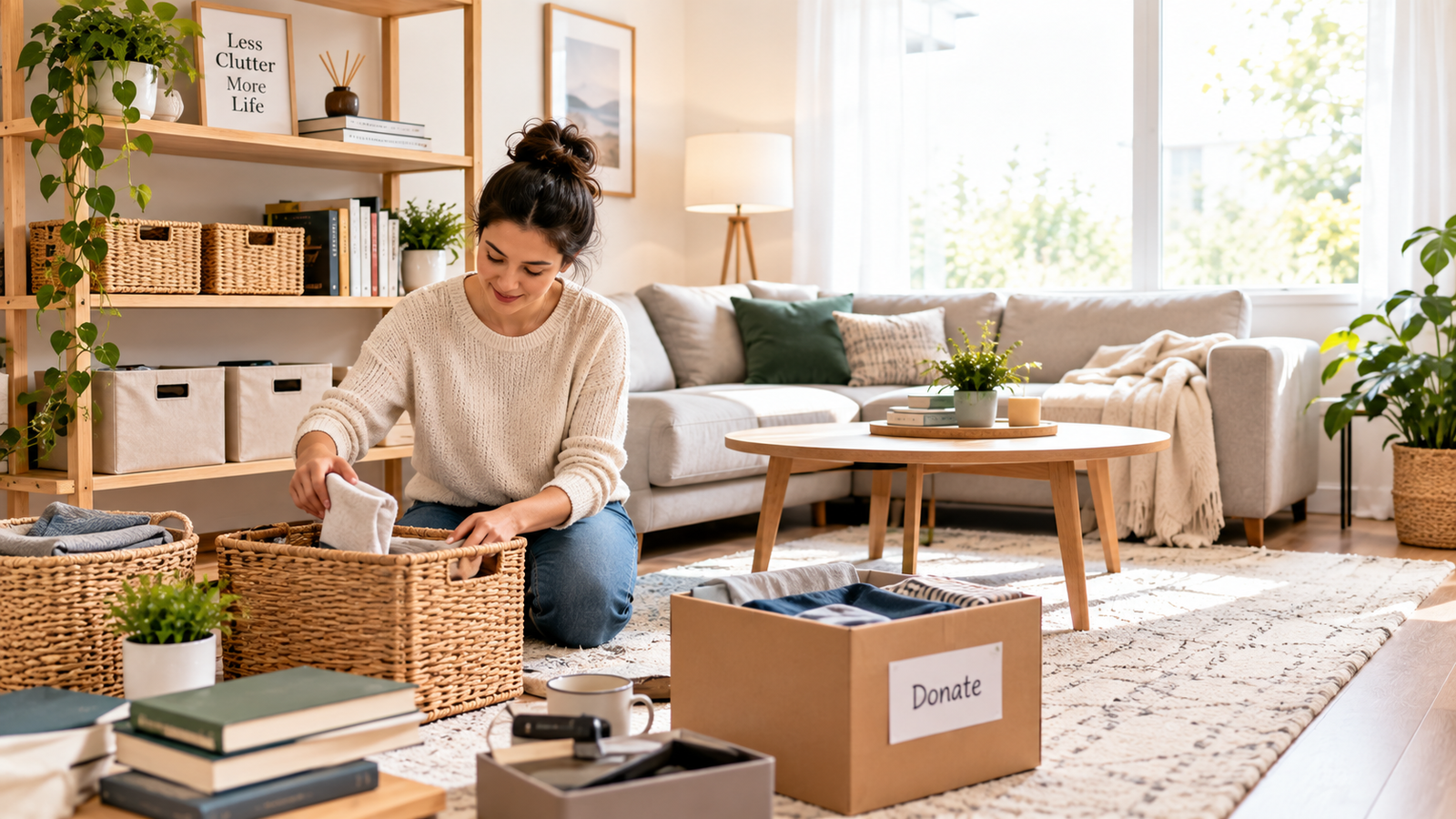
A cluttered home can make everyday life feel more difficult. When clothes, papers, kitchen items, toys, and other belongings start collecting in different areas, it becomes harder to find what you need and keep your home organized.
The good news is that decluttering does not mean throwing everything away or creating a completely minimalist home. The goal is to keep the things you actually use, need, or value while removing items that are no longer useful.
Decluttering your home can also make cleaning easier and help you use your available space more effectively. Instead of trying to organize everything at once, you can work through your home one area at a time.
In this guide, you will learn simple and practical ways to declutter your home without feeling overwhelmed.
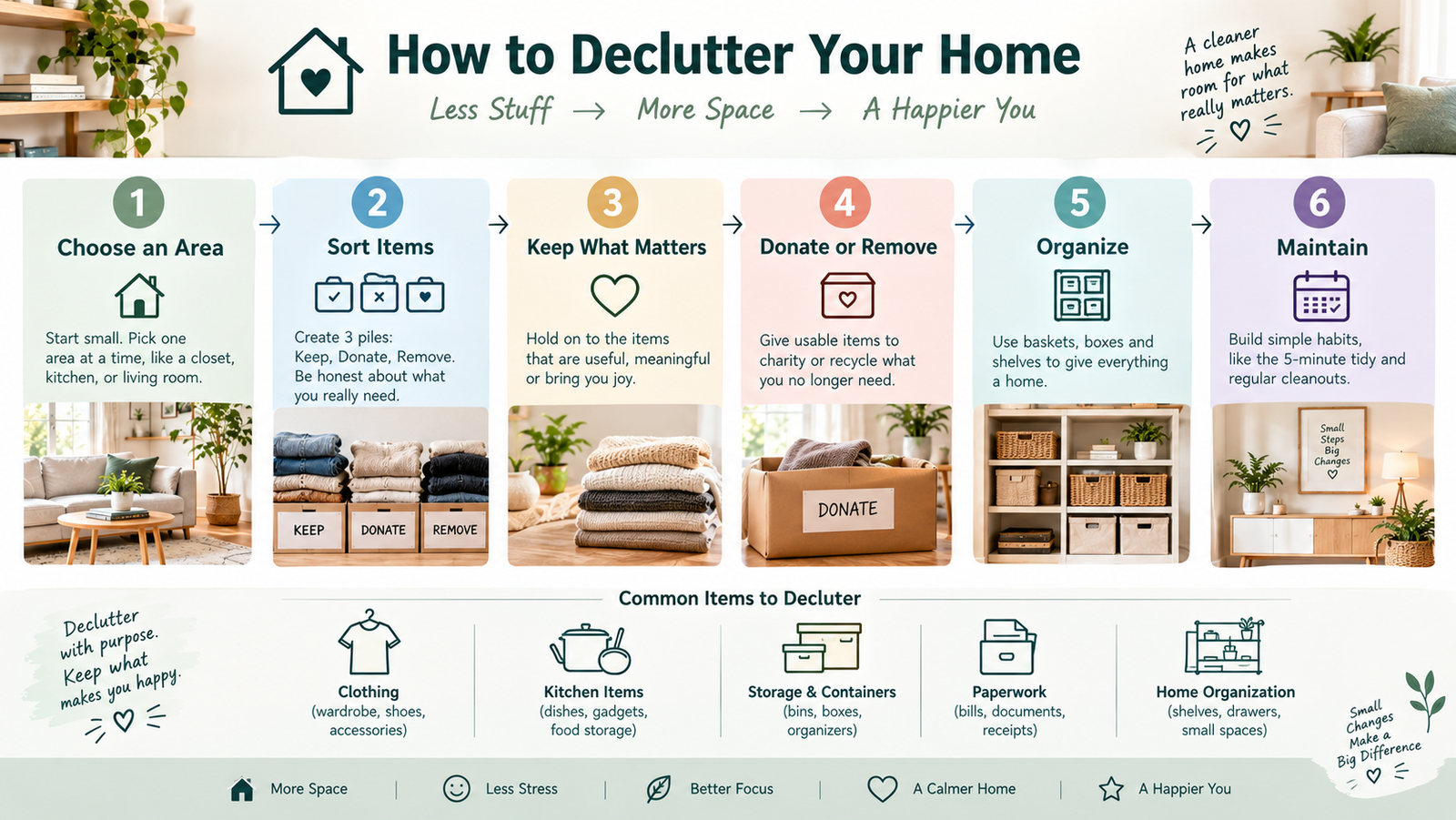
1. Start With One Small Area
One of the biggest mistakes people make when decluttering is trying to clean the entire house at once.
Looking at every room, closet, drawer, and cabinet together can quickly become overwhelming. Instead, choose one small area.
You could start with a single drawer, one shelf, a bedside table, or one section of your closet.
Completing a small area gives you a visible result and makes it easier to continue with the next space.
2. Set a Simple Decluttering Goal
Before you start, decide what you want to accomplish.
Your goal could be to clear your kitchen countertops, organize your bedroom closet, reduce unnecessary paperwork, or make your living room easier to maintain.
A specific goal is easier to achieve than simply saying, “I need to clean my house.”
Write down the area you want to work on and focus only on that area until you finish.
3. Sort Everything Into Categories
Once you choose an area, take the items out and sort them into simple categories.
A useful system is:
- Keep
- Donate
- Sell
- Recycle
- Throw Away
- Move to Another Room
The exact categories are up to you. The important thing is to make a decision about each item instead of simply moving clutter from one place to another.
If something belongs in another room, return it to its proper place after finishing the current area.
4. Ask Yourself If You Actually Use It
When deciding whether to keep something, ask yourself a few simple questions.
Do I use this regularly?
Have I used it recently?
Would I buy this item again today?
Does it have a specific purpose?
If the answer is no, consider whether you really need to keep it.
This does not mean you need to remove everything you rarely use. Some items have sentimental or seasonal value. The goal is to make thoughtful decisions rather than automatically keeping everything.
5. Deal With Duplicate Items
Many homes contain multiple versions of the same item.
You might have several kitchen utensils, extra mugs, duplicate cleaning products, multiple bags, or more clothes than you regularly wear.
Look at these duplicates and decide how many you actually need.
Keeping a reasonable backup can be useful, but having more items than you can comfortably store may create unnecessary clutter.
6. Declutter Your Clothes
Clothing is one of the easiest places for clutter to accumulate.
Take everything out of one section of your wardrobe and sort your clothes into categories.
Look for items that no longer fit, are uncomfortable, damaged beyond practical repair, or have not been worn for a long time.
Keep clothing that fits your current lifestyle and that you actually enjoy wearing.
For seasonal clothing, use appropriate storage so that your everyday wardrobe remains easier to manage.
7. Organize Your Kitchen
The kitchen can quickly become crowded with appliances, dishes, containers, utensils, and food products.
Start with one cabinet or drawer at a time.
Remove items that are broken, duplicated, rarely used, or no longer needed. Check food storage areas for expired products and organize remaining items by category.
Keep frequently used items in easily accessible locations.
A decluttered kitchen is easier to clean and makes cooking more convenient.
8. Clear Your Living Room
The living room is often a collection point for items from different parts of the house.
Books, toys, chargers, blankets, bags, papers, and other belongings can quickly cover tables and other surfaces.
Start by removing anything that does not belong in the living room.
Then organize the remaining items using baskets, shelves, cabinets, or storage furniture.
Try to keep frequently used surfaces such as coffee tables and side tables relatively clear.
9. Declutter Your Bathroom
Bathrooms can accumulate many products that are rarely used.
Check your cabinets, drawers, and shelves for products that are empty, expired, damaged, or no longer needed.
Group similar products together so they are easier to find.
For example, keep hair products together, skincare items together, and cleaning supplies in their own storage area.
Avoid buying new products simply because they are on sale if you already have enough at home.
10. Deal With Paper Clutter
Paper can quickly create a messy home.
Old receipts, advertisements, unnecessary documents, and paperwork can pile up in drawers and on desks.
Create a simple system for important documents. Keep essential papers in a safe and organized location.
Recycle papers you no longer need and avoid keeping unnecessary documents just because you might possibly need them someday.
For important records, follow appropriate retention requirements rather than automatically throwing them away.
11. Organize Digital Clutter Too
Decluttering is not limited to physical items.
Your phone and computer can also become cluttered with unused applications, duplicate photos, old downloads, and unnecessary files.
Spend a few minutes reviewing your digital storage.
Delete files you no longer need, organize important photos into folders, and remove applications that you do not use.
A cleaner digital environment can make it easier to find important information.
12. Create a Home for Everything
One of the best ways to prevent clutter from returning is to give everything a designated place.
Keys can have a specific hook or tray. Shoes can have a shoe rack. Remote controls can stay in one basket. Cleaning supplies can have a dedicated cabinet.
When an item has a clear home, it becomes easier to put it away after use.
This simple habit can make daily organization much easier.
13. Use Storage Carefully
Storage containers can be helpful, but buying more containers is not always the solution to clutter.
First remove items you no longer need. Then determine what actually requires storage.
Use baskets, bins, shelves, drawer dividers, and containers to organize items you have decided to keep.
Labeling containers can also make it easier to find things later, especially in closets, storage rooms, and kitchens.
14. Use the One-In, One-Out Rule
A simple way to control future clutter is the one-in, one-out rule.
Whenever you bring a new item into your home, consider removing an older item that serves a similar purpose.
For example, if you buy a new jacket, you might donate one that you no longer wear.
This does not have to be applied strictly to every item, but it can be a useful habit for clothing, kitchenware, books, and other categories that easily accumulate.
15. Create a Donation Box
Keep a small box or bag in an accessible location for items you no longer need.
Whenever you find something that is still usable but no longer useful to you, place it in the donation box.
When the box becomes full, donate the items through an appropriate local organization or community option.
This makes decluttering an ongoing process rather than a once-a-year activity.
16. Avoid the “Maybe” Pile
One of the hardest parts of decluttering is dealing with items you are unsure about.
Instead of creating a permanent “maybe” pile, consider using a temporary decision box.
Place uncertain items inside and mark the date. If you do not use or need them during the agreed period, review them again.
This approach gives you time to make a decision without immediately putting everything back into your storage space.
For sentimental or important items, take more time and avoid making rushed decisions.
17. Declutter Sentimental Items Slowly
Sentimental belongings can be the most difficult things to organize.
Old photographs, gifts, letters, souvenirs, and family items may have emotional value even if they are not used regularly.
Do not feel pressured to remove everything that is not practical.
Instead, choose a reasonable amount of space for sentimental belongings. Keep the items that are genuinely meaningful and organize them carefully.
You can also digitize some photographs or documents when appropriate, while preserving important originals.
18. Make Decluttering a Regular Habit
Decluttering works best when it becomes part of your routine.
You do not need to spend an entire weekend every month cleaning your home.
Even 10 to 15 minutes can make a difference.
You could choose one drawer every week, review your wardrobe once a season, or quickly reset the living room every evening.
Small regular actions prevent clutter from becoming a much larger problem.
19. Declutter Before Organizing
A common mistake is organizing clutter without actually reducing it.
Buying baskets and storage boxes can make things look neat temporarily, but if you have too many unnecessary belongings, the underlying problem remains.
Declutter first and organize second.
Once you have decided what you are keeping, you can choose storage solutions that fit your actual needs.
20. Create a Daily Reset Routine
A short daily reset can help maintain a clutter-free home.
At the end of the day, spend a few minutes returning items to their proper places.
Put away clothes, return dishes to the kitchen, organize cushions, clear surfaces, and place miscellaneous items where they belong.
This small routine can prevent several days of clutter from building up.
Common Decluttering Mistakes to Avoid
Decluttering can become difficult when you try to do too much at once.
Avoid emptying every room simultaneously. If you cannot finish the project, you may end up with piles of belongings throughout the house.
Another common mistake is buying storage products before deciding what to keep.
It is also important not to throw away other people’s belongings without their permission. If you share your home with family members, give them the opportunity to make decisions about their personal items.
Finally, do not expect your home to remain perfectly organized all the time. A home is meant to be lived in. The goal is to create a space that is easier and more comfortable to maintain.
A Simple Decluttering Plan
If you are not sure where to begin, try this simple plan:
Day 1: Declutter one drawer.
Day 2: Organize one shelf.
Day 3: Review your clothes.
Day 4: Declutter kitchen items.
Day 5: Clear the living room.
Day 6: Organize bathroom products.
Day 7: Review the week and remove remaining unwanted items.
You can adjust the schedule according to your home and available time.
The important thing is to make steady progress rather than trying to finish everything in one day.
Final Thoughts
Learning how to declutter your home does not require extreme minimalism or getting rid of everything you own.
Start small, make thoughtful decisions, and focus on keeping the things that are useful, necessary, or genuinely meaningful.
Declutter one area at a time, create a designated place for your belongings, and develop simple habits that prevent clutter from returning.
With regular effort, your home can become easier to clean, easier to organize, and more comfortable to live in.