
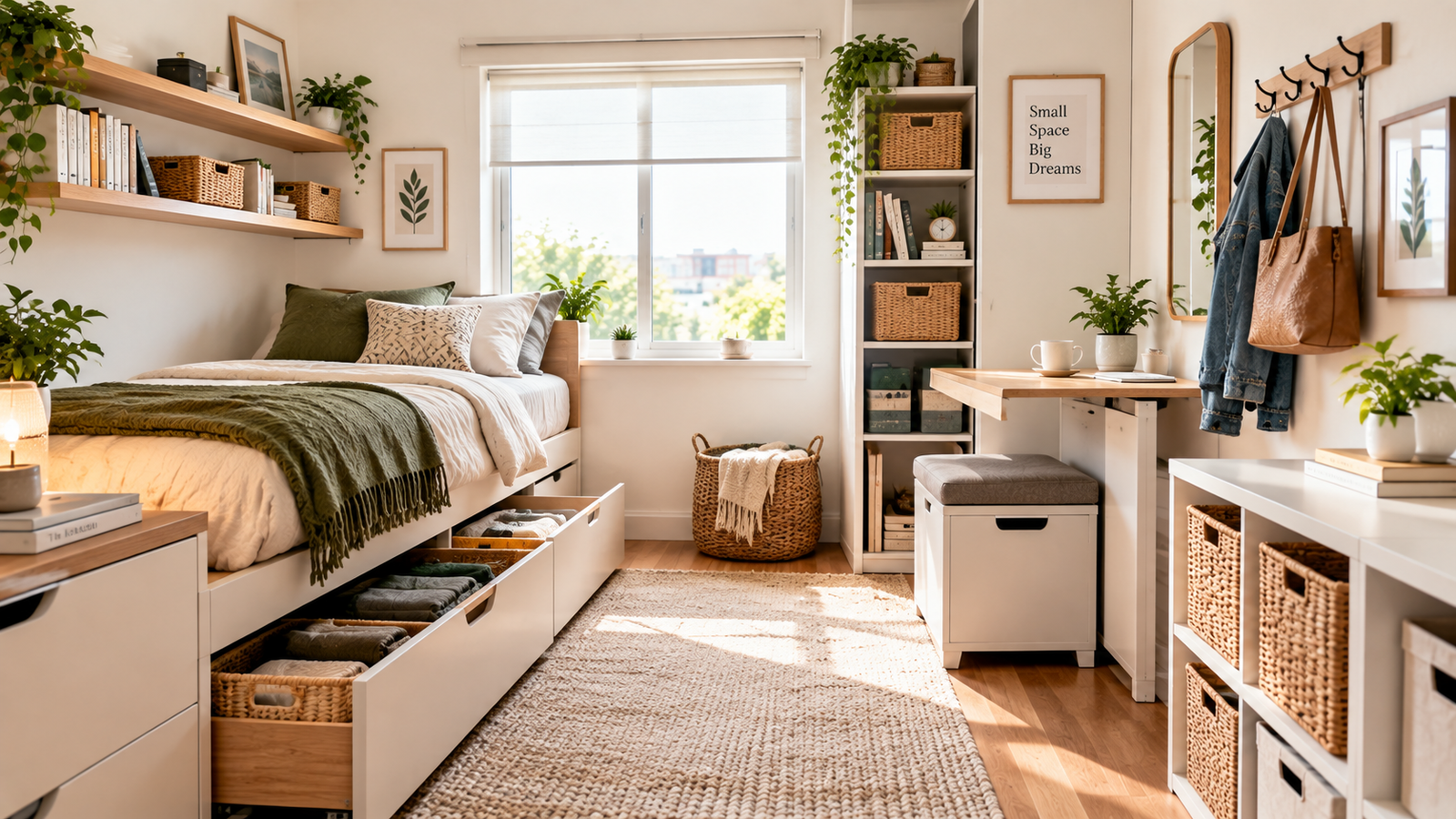
Small rooms can be comfortable and practical, but finding enough storage space can be a challenge. Clothes, books, household items, decorations, and everyday belongings can quickly make a compact room feel crowded.
The good news is that you do not always need a bigger room to create more storage. With smart planning, you can use walls, corners, furniture, doors, and even unused areas more effectively.
The best storage solutions are not simply about putting more things into a room. They are about making the available space work better while keeping frequently used items easy to access.
In this guide, we will explore practical storage ideas for small rooms that can help you reduce clutter and create a more organized home.
1. Use Vertical Wall Space
When floor space is limited, look up.
Walls provide valuable storage space that is often underused. Floating shelves, wall-mounted cabinets, pegboards, and tall bookcases can help you store items without taking up much floor area.
Use wall storage for books, small baskets, decorations, plants, or everyday items.
Keep frequently used items within easy reach and place less frequently used belongings higher up.
Using vertical space can make a small room more functional without making the floor feel crowded.
2. Choose a Bed With Storage
The space underneath a bed is often wasted.
If you are buying a new bed, consider a design with built-in drawers or storage compartments. If your existing bed has enough clearance underneath, you can use storage boxes or containers.
Under-bed storage works well for seasonal clothing, extra bedding, shoes, luggage, and other items that you do not need every day.
Use labeled containers so you can quickly identify what is stored underneath the bed.
3. Use Storage Boxes Under Furniture
Storage is not limited to beds.
If you have enough space underneath a sofa, bench, cabinet, or other furniture, consider using low-profile storage boxes.
Choose containers that fit the available space instead of buying them first and hoping they will fit.
Clear containers can make it easier to see the contents, while labeled opaque boxes can create a cleaner visual appearance.
4. Install Floating Shelves
Floating shelves are useful because they provide storage without requiring a large piece of furniture.
Install them above a desk, beside a bed, near a doorway, or on an empty wall.
Use them for books, small storage baskets, photographs, plants, and decorative items.
Avoid placing too many objects on each shelf. Leaving some empty space helps the room look more organized.
5. Use the Back of Doors
The back of a door can provide surprisingly useful storage space.
Over-the-door organizers can hold shoes, accessories, cleaning supplies, toiletries, or small household items.
In a bedroom, the back of the closet door can be used for accessories or clothing items. In a bathroom, it can hold smaller personal-care products.
Before installing anything, make sure the door can still close properly and that the storage system does not interfere with hinges or handles.
6. Add Hooks to Empty Walls
Hooks are one of the simplest storage solutions for small rooms.
Install hooks near an entryway for coats and bags, inside a closet for accessories, or in a bedroom for frequently used items.
You can also use hooks in kitchens, bathrooms, and home offices.
Choose hooks that can safely support the weight of the items you plan to hang.
A few well-placed hooks can prevent everyday belongings from ending up on chairs, floors, or tables.
7. Choose Multifunctional Furniture
Furniture that performs multiple functions is especially valuable in a small room.
A storage ottoman can provide seating and hidden storage. A bench with compartments can serve as seating while storing shoes or blankets.
A desk with drawers can provide both a workspace and storage. A sofa bed can also provide seating during the day and sleeping space when needed.
Before buying a new piece of furniture, consider how many problems it can solve.
8. Use a Storage Bench
A storage bench can be useful in bedrooms, entryways, and living rooms.
In a bedroom, it can sit at the end of the bed and provide a place to store blankets or clothing.
In an entryway, it can provide seating while keeping shoes or bags organized.
Choose a bench that fits the available space and does not block walking paths.
9. Organize Your Closet Vertically
Closets often have unused vertical space above hanging clothes or shelves.
Add an additional shelf, hanging organizer, or stackable storage solution where appropriate.
Use the upper areas for seasonal clothing, bags, bedding, or other items that are not needed every day.
Keep everyday clothing at a comfortable height so that your closet remains convenient to use.
10. Use Drawer Dividers
Small drawers can quickly become messy because different items get mixed together.
Drawer dividers help separate clothing, accessories, office supplies, kitchen tools, or other small belongings.
You can use adjustable dividers or simple storage trays depending on the drawer.
The goal is to give each category its own space so items are easier to find and return.
11. Use Corner Storage
Corners are often overlooked in small rooms.
A narrow corner shelf, tall bookcase, small cabinet, or corner desk can turn unused space into useful storage.
Corner furniture is particularly helpful when you do not have enough room for larger storage units.
However, avoid filling every corner. Keeping some open areas can make the room feel less crowded.
12. Add Storage Above the Desk
If your room includes a workspace, use the wall above the desk.
Floating shelves, small cabinets, pegboards, and wall organizers can keep notebooks, stationery, documents, and other supplies off the desk.
This leaves more workspace available for studying, working, or creative activities.
Keep the most frequently used items within easy reach.
13. Use Baskets for Open Storage
Baskets are useful for items that need to be stored quickly but still need to look organized.
Place baskets on shelves, inside cabinets, under tables, or in closets.
Use different baskets for different categories, such as blankets, toys, accessories, books, or household supplies.
If several baskets look similar, labels can make it easier to find things.
14. Make Better Use of Your Nightstand
A nightstand does not have to be only a place for a lamp and phone.
Choose a nightstand with drawers or shelves to store books, chargers, glasses, and other small items.
If your existing nightstand has limited storage, use a small basket underneath it if there is enough space.
Keep only essential items nearby so the surface does not become cluttered.
15. Use Wall-Mounted Cabinets
Wall-mounted cabinets can provide significant storage without taking up valuable floor space.
They can work well in bathrooms, kitchens, bedrooms, and home offices.
Choose cabinets that are appropriate for the wall and install them securely.
Do not overload wall-mounted storage beyond its recommended capacity.
16. Use the Space Above Doors
The area above a door is another storage opportunity that is often overlooked.
A shelf installed above a doorway can be used for lightweight items such as books, baskets, towels, or decorative storage.
This type of storage is especially useful for items that are not needed every day.
Make sure the shelf is securely installed and does not interfere with the door or create a safety hazard.
17. Store Seasonal Items Separately
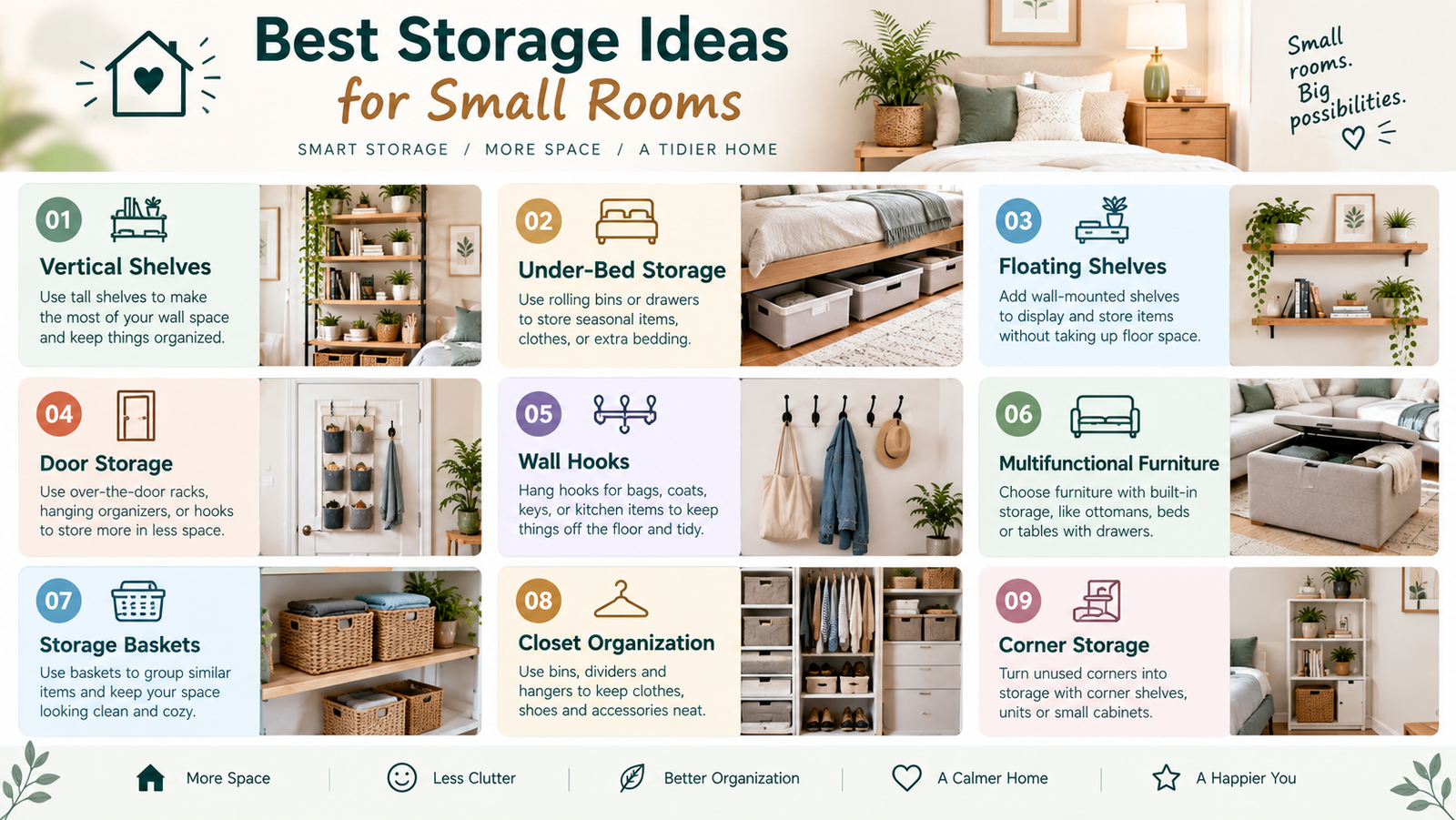
Seasonal items do not need to occupy your most accessible storage space throughout the year.
Winter clothing, holiday decorations, extra blankets, and seasonal accessories can be stored in labeled containers.
Place them in higher shelves, under-bed storage, or another suitable storage area.
When the season changes, switch the items you need and keep the rest stored away.
18. Use Clear Containers
Clear storage containers can make it easier to identify what you have.
They are particularly useful for closets, under-bed storage, bathrooms, kitchens, and storage rooms.
Instead of opening several boxes to find one item, you can see the contents before taking the container out.
Use labels as an additional organization method, especially when containers are stacked.
19. Create a Dedicated Storage Area
Even in a small room, it helps to have a specific place for different categories of belongings.
For example, create one area for books, another for clothing, and another for office supplies.
When everything has a designated home, it becomes easier to keep the room organized.
Avoid creating random storage areas throughout the room because this can make it difficult to remember where things are.
20. Declutter Before Adding Storage
One of the most important storage rules is simple: do not organize things you no longer need.
Before purchasing shelves, boxes, or cabinets, go through your belongings and remove items that are broken, unused, duplicated, or no longer useful.
Decluttering reduces the amount of storage you need in the first place.
Once you know what you are keeping, you can choose storage solutions based on your actual needs.
Storage Ideas for Different Small Rooms
Different rooms require different storage strategies.
Small Bedroom
Use under-bed storage, vertical shelves, closet organizers, storage benches, and multifunctional furniture.
Small Living Room
Consider storage ottomans, floating shelves, cabinets, baskets, and furniture with built-in storage.
Small Home Office
Use wall-mounted shelves, drawer organizers, pegboards, and vertical cabinets to keep your workspace clear.
Small Bathroom
Use wall cabinets, over-the-door organizers, baskets, and narrow shelving units.
Small Kitchen
Use cabinet organizers, drawer dividers, vertical storage, hooks, and pantry containers.
The best solution depends on the room’s layout and the type of belongings you need to store.
How to Choose the Right Storage Solution
Before buying any storage product, measure the available space.
Check the width, height, and depth of the area. Also consider whether doors, drawers, or windows need enough space to open properly.
Think about how frequently you use the items you want to store.
Everyday items should be easy to reach, while seasonal or rarely used belongings can go into less accessible areas.
Finally, choose storage that fits the style of your room. Practical storage can also contribute to the overall appearance of your home.
Common Storage Mistakes to Avoid
A common mistake is buying storage containers without measuring the available space.
Another mistake is using too many storage products. More boxes do not always mean better organization.
Avoid hiding clutter in containers without sorting it first. This can make it harder to find things later.
It is also important not to overload shelves, cabinets, or wall-mounted storage. Always follow the manufacturer’s weight recommendations and use suitable mounting hardware.
Finally, remember that storage should make your life easier. If a system is complicated, you may not use it consistently.
Final Thoughts
Small rooms can have plenty of useful storage when you make smart use of the space available.
Start with simple solutions such as vertical shelves, under-bed storage, hooks, baskets, multifunctional furniture, and closet organizers. Before adding storage, take time to declutter and remove items you no longer need.
The best storage system is one that keeps your belongings organized while making everyday life easier.
You do not need a large home to stay organized. With thoughtful planning and a few practical storage solutions, even a small room can feel comfortable, functional, and uncluttered.