
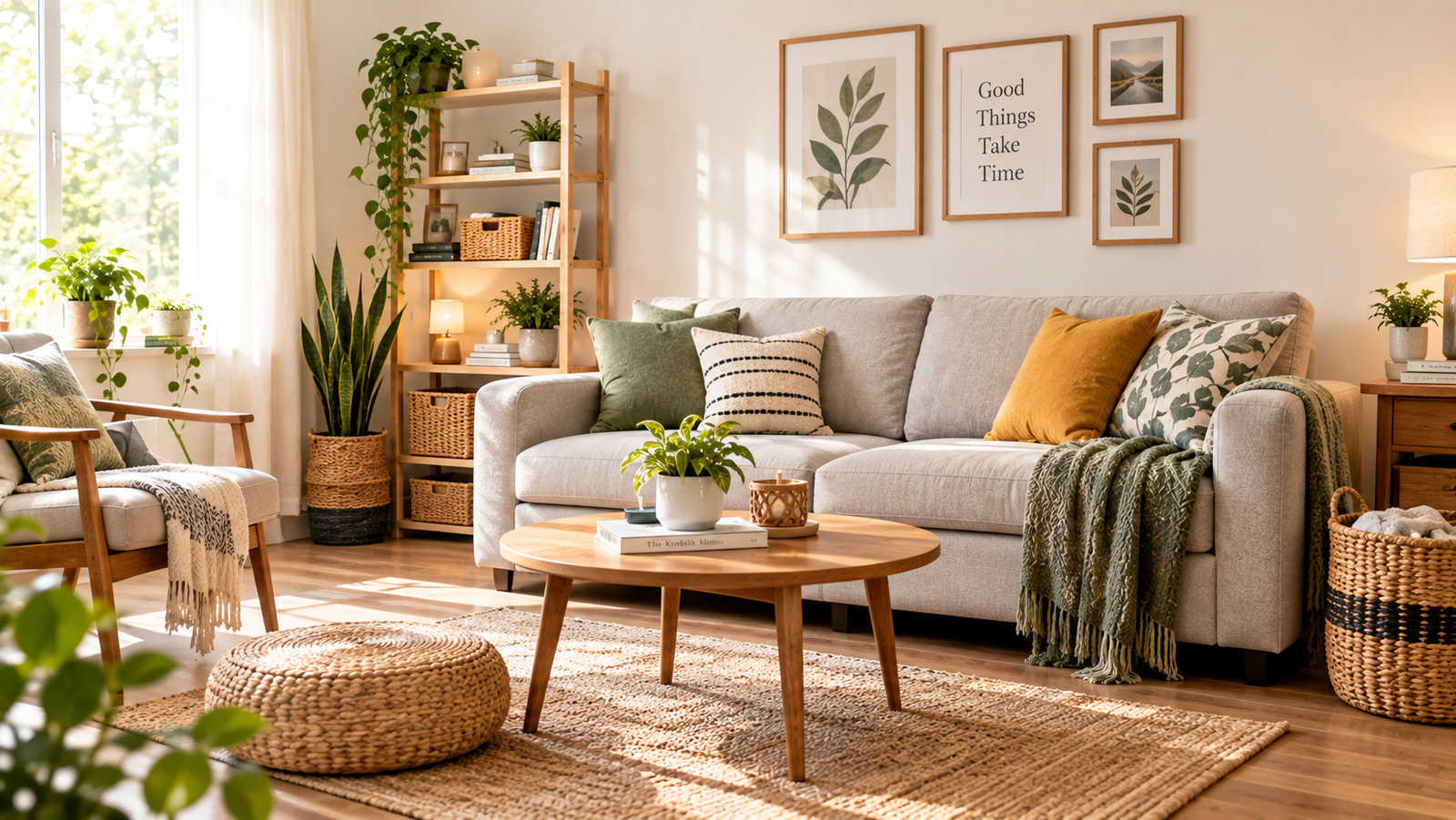
Decorating your home does not have to be expensive. You can create a stylish, comfortable, and welcoming space without spending a large amount of money on furniture and decorations.
The key to affordable home decor is making thoughtful changes instead of buying everything new. A fresh arrangement of furniture, a few decorative accessories, better lighting, or some simple DIY projects can make a noticeable difference.
Whether you are decorating a small apartment, a family home, or a single room, there are plenty of budget-friendly ways to improve your space.
In this guide, we will explore simple home decor ideas on a budget that can help you create a beautiful home while keeping your spending under control.
1. Rearrange Your Existing Furniture
One of the easiest ways to refresh your home costs nothing at all.
Instead of immediately buying new furniture, try rearranging the pieces you already have. Move your sofa, chairs, tables, or bed into a different position and see how the room feels.
Sometimes a room looks outdated simply because the furniture has stayed in the same arrangement for years.
Create clear walking paths and make sure the furniture arrangement supports how you actually use the room.
A simple rearrangement can give your space a completely different appearance without spending any money.
2. Add Decorative Cushions
Cushions are an affordable way to introduce color, texture, and personality into a room.
You do not need to replace your sofa or chairs. Simply adding a few cushions with different patterns or textures can make the seating area feel more comfortable and attractive.
Choose colors that complement your existing furniture.
For a more coordinated look, repeat one or two cushion colors in other parts of the room, such as curtains, rugs, artwork, or small accessories.
3. Use Mirrors as Decor
Mirrors can serve both a practical and decorative purpose.
A well-placed mirror can reflect light and make a room feel brighter. It can also become a focal point on an otherwise empty wall.
You do not need an expensive designer mirror. Affordable frames can work just as well when they match the style of your home.
Place a mirror where it can reflect natural light or an attractive part of the room.
4. Add Indoor Plants
Plants can bring natural color and life into your home.
You do not need a large collection of expensive plants. Start with one or two affordable options that suit the lighting conditions in your room.
Place smaller plants on shelves, tables, or windowsills. Larger plants can be used as focal points in empty corners.
If caring for live plants is difficult, you can also consider suitable artificial plants for decorative purposes.
Choose plants according to the light and maintenance conditions available in your home.
5. Create a Gallery Wall
An empty wall can become a decorative feature with a simple gallery arrangement.
Use family photographs, artwork, prints, or other meaningful images. You can use matching frames for a coordinated appearance or combine different frame styles for a more casual look.
Before putting holes in the wall, arrange the frames on the floor to test the layout.
A gallery wall allows you to personalize your home without purchasing expensive artwork.
6. Refresh Your Curtains
Changing curtains can make a room look noticeably different.
If your existing curtains are still in good condition, consider cleaning or repositioning them before replacing them.
When buying new curtains, choose affordable fabrics and colors that complement your existing walls and furniture.
Light-colored curtains can help maintain a bright atmosphere, while warmer shades can create a more comfortable feeling.
Make sure the curtain length and width work properly with your windows.
7. Update Cabinet and Drawer Handles
Small hardware changes can give furniture a fresh appearance.
Replace outdated handles and knobs on kitchen cabinets, bathroom cabinets, dressers, or storage furniture.
There are many affordable hardware styles available, from simple modern designs to traditional options.
Before purchasing new handles, check the measurements and spacing of the existing screw holes.
This small upgrade can make older furniture look more current without replacing the entire piece.
8. Use Decorative Baskets
Baskets can combine storage and decoration.
Use them to organize blankets, magazines, toys, accessories, or other everyday items.
Place baskets on shelves, under tables, beside sofas, or inside cabinets.
Choose baskets that match the colors and materials already used in your room.
Instead of leaving small belongings scattered around, placing them in attractive baskets can make the room look cleaner and more organized.
9. Add a Stylish Area Rug
An area rug can change the look and feeling of a room without requiring new furniture.
A rug can help define a seating area, add warmth, and introduce color or pattern.
You do not need to buy an expensive rug. Look for affordable options that are appropriate for the room and easy to maintain.
Choose the size carefully. A rug that is too small may look disconnected from the furniture, while an oversized rug may overwhelm a small room.
10. Improve Your Lighting
Lighting can have a major effect on home decor.
If a room feels dull, consider adding a table lamp, floor lamp, or small decorative light.
You can also move existing lamps to different locations to see how the atmosphere changes.
Use warm, comfortable lighting in areas where you relax and brighter task lighting where you read, work, or perform detailed activities.
Good lighting can make affordable furniture and decorations look more attractive.
11. Decorate With Books
Books can be useful decorative items, especially if you already own them.
Arrange books on shelves, coffee tables, or side tables. You can organize them by size, subject, or color depending on the look you prefer.
Add a small plant, candle, or decorative object next to a stack of books to create a simple display.
This is an inexpensive way to add personality because you can use things you already own.
12. Create a Simple Focal Point
Every room can benefit from having a main visual feature.
In a living room, the focal point could be artwork, a mirror, a fireplace, or an attractive arrangement of furniture.
In a bedroom, the bed or a decorated wall behind it can serve as the focal point.
Choose one main feature rather than making every part of the room compete for attention.
A clear focal point can make even a simple room feel more thoughtfully decorated.
13. Make Your Own Wall Art
You do not always need expensive artwork to decorate your walls.
You can create simple artwork yourself using affordable materials. Abstract shapes, simple typography, photographs, pressed leaves, or other creative ideas can work well.
Print your favorite photographs or designs and place them in affordable frames.
The most important thing is choosing something that fits your personal style and complements the room.
14. Reuse and Repurpose Old Items
Before buying new decorations, look around your home for things that can be reused.
An old wooden box can become a storage container. A glass jar can become a simple decorative vase. An unused tray can become a centerpiece.
Repurposing items can save money and give your home a more personal character.
You can also repaint or refinish suitable furniture to give it a new appearance.
15. Add a Decorative Tray
A simple tray can make small collections of items look more organized.
Place a tray on a coffee table, dining table, kitchen counter, or bathroom surface.
Use it to group candles, small plants, books, bottles, or other decorative objects.
Instead of having several unrelated items scattered across a surface, grouping them together creates a cleaner appearance.
16. Change Small Decorative Details
You do not have to redesign an entire room.
Small details can create a noticeable difference. Replace old cushion covers, change a lampshade, add a new table runner, or introduce a few new decorative objects.
These small updates are often much cheaper than replacing major furniture.
Choose changes that complement what you already own rather than creating an entirely different style.
17. Keep Your Surfaces Organized
A clean and organized home often looks more stylish, even without expensive decorations.
Clear unnecessary items from coffee tables, countertops, shelves, and other visible surfaces.
Keep a few carefully selected decorative pieces instead of covering every available area.
Open space allows the decorations you choose to stand out.
Regularly returning everyday items to their proper places can also help maintain a polished appearance.
18. Use Neutral Colors as a Base
Neutral colors can make budget decorating easier because they work well with many different styles.
White, cream, beige, gray, and other soft tones can create a simple foundation.
You can then introduce color through cushions, artwork, plants, rugs, and other smaller accessories.
This approach also makes it easier to change your decor later without replacing major furniture.
19. Decorate With Natural Materials
Natural materials can add warmth and texture to a room.
Wood, cotton, woven baskets, plants, and similar materials can create a comfortable atmosphere.
You do not need expensive natural furniture. Small accessories can provide the same type of visual effect at a lower cost.
For example, a wooden tray or woven basket can add texture without requiring a major purchase.
20. Shop Your Own Home
Before going shopping, take a look around your home.
You may already own decorative items that could work better in another room.
Move a lamp from the bedroom to the living room, place an unused vase on a shelf, or move artwork to a different wall.
Changing where existing items are used can give your home a refreshed appearance without spending anything.
21. Set a Decorating Budget
Even affordable decorating can become expensive if you buy too many things at once.
Before shopping, decide how much you can comfortably spend.
Make a list of the changes that would have the biggest impact and prioritize those first.
For example, you may decide to spend your budget on curtains and lighting instead of buying several small decorations.
A clear budget helps prevent unnecessary purchases.
22. Buy Slowly Instead of All at Once
You do not need to finish decorating your home in one weekend.
Buy or create one item at a time and see how it works with the rest of the room.
This approach gives you time to find better deals and prevents you from buying items that you later decide do not fit your style.
A home can develop naturally over time.
23. Look for Affordable Secondhand Items
Secondhand furniture and decor can provide useful options when you have a limited budget.
You may find tables, chairs, mirrors, shelves, frames, and other items that can be cleaned, repaired, painted, or reused.
Always check the condition of an item before buying it and make sure it is appropriate for your home.
With a little patience, secondhand shopping can help you find unique pieces at lower prices.
24. Keep Your Decor Simple
A beautiful home does not need to be filled with decorations.
Too many objects can make a room feel crowded and make cleaning more difficult.
Choose a few pieces that you genuinely like and give them enough space to stand out.
Simple decor can often look more intentional than a room filled with unrelated accessories.
25. Make Comfort a Priority
Home decor should not only look good. Your home should also be comfortable to live in.
Choose seating that is comfortable, lighting that is pleasant, and storage that makes everyday activities easier.
Do not follow a decorating trend if it makes your home less practical.
The best budget-friendly decor combines appearance, comfort, and functionality.
Common Budget Decorating Mistakes
One common mistake is buying too many small decorations without considering the overall design.
Another is choosing items simply because they are cheap. A low-cost item that you do not use or like is still unnecessary spending.
Avoid copying an entire room from a magazine or social media if it does not suit your lifestyle or space.
It is also important not to ignore quality completely. For frequently used items, choosing something durable can provide better value over time.
How to Decorate Your Home on a Small Budget
If your budget is very limited, start with changes that cost little or nothing.
Rearrange furniture, declutter surfaces, move decorations between rooms, clean your windows, organize shelves, and improve the lighting you already have.
Next, focus on one affordable improvement at a time.
You might add cushions one month, a rug later, and new artwork when your budget allows.
There is no need to complete everything immediately.
Final Thoughts
Creating a beautiful home does not require a large decorating budget.
Simple changes such as rearranging furniture, adding plants, using mirrors, updating curtains, improving lighting, and organizing decorative items can make a significant difference.
The most important part of budget home decor is making thoughtful choices. Use what you already have, shop carefully, repurpose suitable items, and focus on changes that improve both the appearance and comfort of your home.
With a little creativity and planning, you can create a home that feels stylish, personal, and welcoming without spending too much.
Decorating your home does not have to be expensive. You can create a stylish, comfortable, and welcoming space without spending a large amount of money on furniture and decorations.
The key to affordable home decor is making thoughtful changes instead of buying everything new. A fresh arrangement of furniture, a few decorative accessories, better lighting, or some simple DIY projects can make a noticeable difference.
Whether you are decorating a small apartment, a family home, or a single room, there are plenty of budget-friendly ways to improve your space.
In this guide, we will explore simple home decor ideas on a budget that can help you create a beautiful home while keeping your spending under control.
1. Rearrange Your Existing Furniture
One of the easiest ways to refresh your home costs nothing at all.
Instead of immediately buying new furniture, try rearranging the pieces you already have. Move your sofa, chairs, tables, or bed into a different position and see how the room feels.
Sometimes a room looks outdated simply because the furniture has stayed in the same arrangement for years.
Create clear walking paths and make sure the furniture arrangement supports how you actually use the room.
A simple rearrangement can give your space a completely different appearance without spending any money.
2. Add Decorative Cushions
Cushions are an affordable way to introduce color, texture, and personality into a room.
You do not need to replace your sofa or chairs. Simply adding a few cushions with different patterns or textures can make the seating area feel more comfortable and attractive.
Choose colors that complement your existing furniture.
For a more coordinated look, repeat one or two cushion colors in other parts of the room, such as curtains, rugs, artwork, or small accessories.
3. Use Mirrors as Decor
Mirrors can serve both a practical and decorative purpose.
A well-placed mirror can reflect light and make a room feel brighter. It can also become a focal point on an otherwise empty wall.
You do not need an expensive designer mirror. Affordable frames can work just as well when they match the style of your home.
Place a mirror where it can reflect natural light or an attractive part of the room.
4. Add Indoor Plants
Plants can bring natural color and life into your home.
You do not need a large collection of expensive plants. Start with one or two affordable options that suit the lighting conditions in your room.
Place smaller plants on shelves, tables, or windowsills. Larger plants can be used as focal points in empty corners.
If caring for live plants is difficult, you can also consider suitable artificial plants for decorative purposes.
Choose plants according to the light and maintenance conditions available in your home.
5. Create a Gallery Wall
An empty wall can become a decorative feature with a simple gallery arrangement.
Use family photographs, artwork, prints, or other meaningful images. You can use matching frames for a coordinated appearance or combine different frame styles for a more casual look.
Before putting holes in the wall, arrange the frames on the floor to test the layout.
A gallery wall allows you to personalize your home without purchasing expensive artwork.
6. Refresh Your Curtains
Changing curtains can make a room look noticeably different.
If your existing curtains are still in good condition, consider cleaning or repositioning them before replacing them.
When buying new curtains, choose affordable fabrics and colors that complement your existing walls and furniture.
Light-colored curtains can help maintain a bright atmosphere, while warmer shades can create a more comfortable feeling.
Make sure the curtain length and width work properly with your windows.
7. Update Cabinet and Drawer Handles
Small hardware changes can give furniture a fresh appearance.
Replace outdated handles and knobs on kitchen cabinets, bathroom cabinets, dressers, or storage furniture.
There are many affordable hardware styles available, from simple modern designs to traditional options.
Before purchasing new handles, check the measurements and spacing of the existing screw holes.
This small upgrade can make older furniture look more current without replacing the entire piece.
8. Use Decorative Baskets
Baskets can combine storage and decoration.
Use them to organize blankets, magazines, toys, accessories, or other everyday items.
Place baskets on shelves, under tables, beside sofas, or inside cabinets.
Choose baskets that match the colors and materials already used in your room.
Instead of leaving small belongings scattered around, placing them in attractive baskets can make the room look cleaner and more organized.
9. Add a Stylish Area Rug
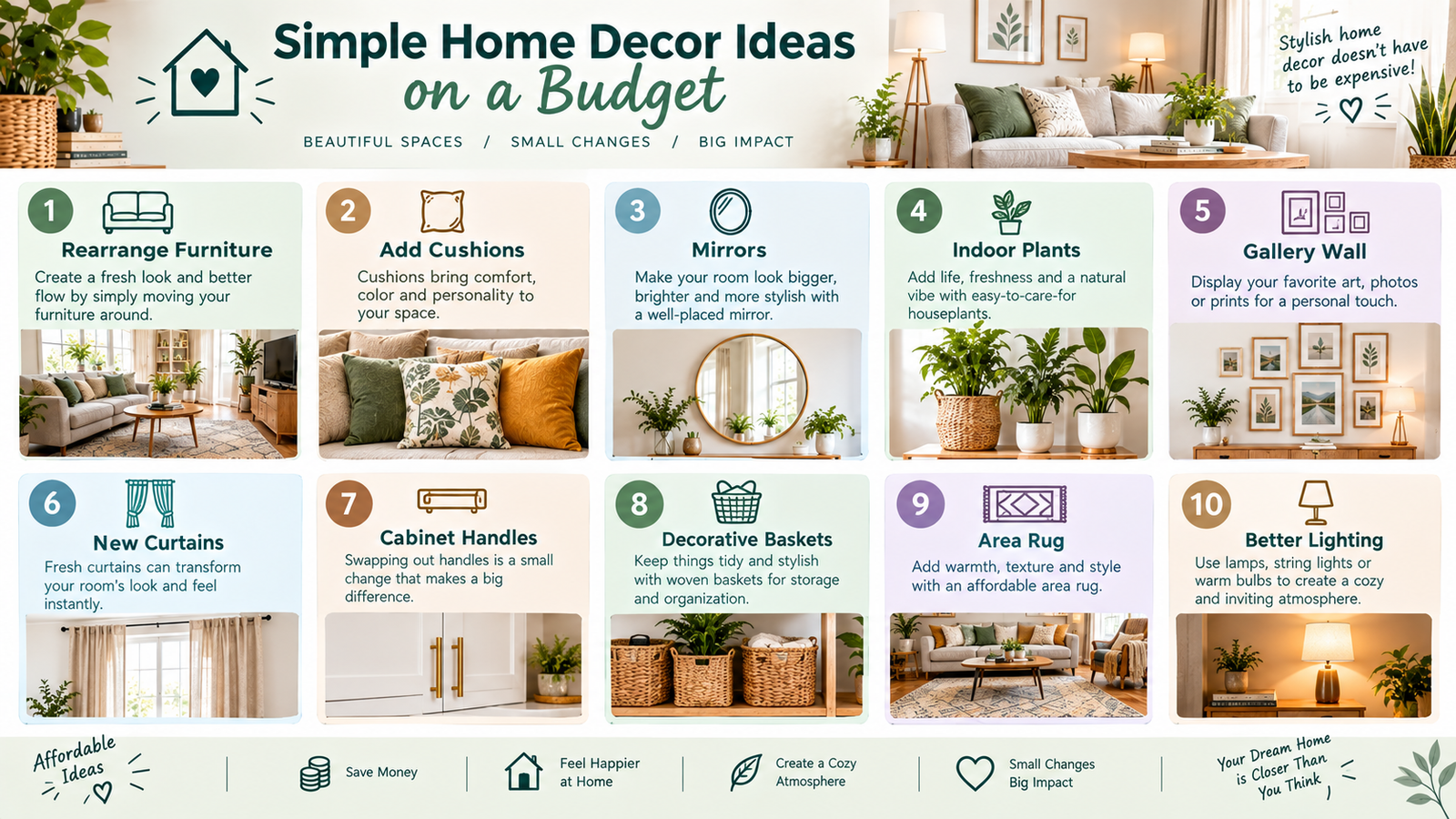
An area rug can change the look and feeling of a room without requiring new furniture.
A rug can help define a seating area, add warmth, and introduce color or pattern.
You do not need to buy an expensive rug. Look for affordable options that are appropriate for the room and easy to maintain.
Choose the size carefully. A rug that is too small may look disconnected from the furniture, while an oversized rug may overwhelm a small room.
10. Improve Your Lighting
Lighting can have a major effect on home decor.
If a room feels dull, consider adding a table lamp, floor lamp, or small decorative light.
You can also move existing lamps to different locations to see how the atmosphere changes.
Use warm, comfortable lighting in areas where you relax and brighter task lighting where you read, work, or perform detailed activities.
Good lighting can make affordable furniture and decorations look more attractive.
11. Decorate With Books
Books can be useful decorative items, especially if you already own them.
Arrange books on shelves, coffee tables, or side tables. You can organize them by size, subject, or color depending on the look you prefer.
Add a small plant, candle, or decorative object next to a stack of books to create a simple display.
This is an inexpensive way to add personality because you can use things you already own.
12. Create a Simple Focal Point
Every room can benefit from having a main visual feature.
In a living room, the focal point could be artwork, a mirror, a fireplace, or an attractive arrangement of furniture.
In a bedroom, the bed or a decorated wall behind it can serve as the focal point.
Choose one main feature rather than making every part of the room compete for attention.
A clear focal point can make even a simple room feel more thoughtfully decorated.
13. Make Your Own Wall Art
You do not always need expensive artwork to decorate your walls.
You can create simple artwork yourself using affordable materials. Abstract shapes, simple typography, photographs, pressed leaves, or other creative ideas can work well.
Print your favorite photographs or designs and place them in affordable frames.
The most important thing is choosing something that fits your personal style and complements the room.
14. Reuse and Repurpose Old Items
Before buying new decorations, look around your home for things that can be reused.
An old wooden box can become a storage container. A glass jar can become a simple decorative vase. An unused tray can become a centerpiece.
Repurposing items can save money and give your home a more personal character.
You can also repaint or refinish suitable furniture to give it a new appearance.
15. Add a Decorative Tray
A simple tray can make small collections of items look more organized.
Place a tray on a coffee table, dining table, kitchen counter, or bathroom surface.
Use it to group candles, small plants, books, bottles, or other decorative objects.
Instead of having several unrelated items scattered across a surface, grouping them together creates a cleaner appearance.
16. Change Small Decorative Details
You do not have to redesign an entire room.
Small details can create a noticeable difference. Replace old cushion covers, change a lampshade, add a new table runner, or introduce a few new decorative objects.
These small updates are often much cheaper than replacing major furniture.
Choose changes that complement what you already own rather than creating an entirely different style.
17. Keep Your Surfaces Organized
A clean and organized home often looks more stylish, even without expensive decorations.
Clear unnecessary items from coffee tables, countertops, shelves, and other visible surfaces.
Keep a few carefully selected decorative pieces instead of covering every available area.
Open space allows the decorations you choose to stand out.
Regularly returning everyday items to their proper places can also help maintain a polished appearance.
18. Use Neutral Colors as a Base
Neutral colors can make budget decorating easier because they work well with many different styles.
White, cream, beige, gray, and other soft tones can create a simple foundation.
You can then introduce color through cushions, artwork, plants, rugs, and other smaller accessories.
This approach also makes it easier to change your decor later without replacing major furniture.
19. Decorate With Natural Materials
Natural materials can add warmth and texture to a room.
Wood, cotton, woven baskets, plants, and similar materials can create a comfortable atmosphere.
You do not need expensive natural furniture. Small accessories can provide the same type of visual effect at a lower cost.
For example, a wooden tray or woven basket can add texture without requiring a major purchase.
20. Shop Your Own Home
Before going shopping, take a look around your home.
You may already own decorative items that could work better in another room.
Move a lamp from the bedroom to the living room, place an unused vase on a shelf, or move artwork to a different wall.
Changing where existing items are used can give your home a refreshed appearance without spending anything.
21. Set a Decorating Budget
Even affordable decorating can become expensive if you buy too many things at once.
Before shopping, decide how much you can comfortably spend.
Make a list of the changes that would have the biggest impact and prioritize those first.
For example, you may decide to spend your budget on curtains and lighting instead of buying several small decorations.
A clear budget helps prevent unnecessary purchases.
22. Buy Slowly Instead of All at Once
You do not need to finish decorating your home in one weekend.
Buy or create one item at a time and see how it works with the rest of the room.
This approach gives you time to find better deals and prevents you from buying items that you later decide do not fit your style.
A home can develop naturally over time.
23. Look for Affordable Secondhand Items
Secondhand furniture and decor can provide useful options when you have a limited budget.
You may find tables, chairs, mirrors, shelves, frames, and other items that can be cleaned, repaired, painted, or reused.
Always check the condition of an item before buying it and make sure it is appropriate for your home.
With a little patience, secondhand shopping can help you find unique pieces at lower prices.
24. Keep Your Decor Simple
A beautiful home does not need to be filled with decorations.
Too many objects can make a room feel crowded and make cleaning more difficult.
Choose a few pieces that you genuinely like and give them enough space to stand out.
Simple decor can often look more intentional than a room filled with unrelated accessories.
25. Make Comfort a Priority
Home decor should not only look good. Your home should also be comfortable to live in.
Choose seating that is comfortable, lighting that is pleasant, and storage that makes everyday activities easier.
Do not follow a decorating trend if it makes your home less practical.
The best budget-friendly decor combines appearance, comfort, and functionality.
Common Budget Decorating Mistakes
One common mistake is buying too many small decorations without considering the overall design.
Another is choosing items simply because they are cheap. A low-cost item that you do not use or like is still unnecessary spending.
Avoid copying an entire room from a magazine or social media if it does not suit your lifestyle or space.
It is also important not to ignore quality completely. For frequently used items, choosing something durable can provide better value over time.
How to Decorate Your Home on a Small Budget
If your budget is very limited, start with changes that cost little or nothing.
Rearrange furniture, declutter surfaces, move decorations between rooms, clean your windows, organize shelves, and improve the lighting you already have.
Next, focus on one affordable improvement at a time.
You might add cushions one month, a rug later, and new artwork when your budget allows.
There is no need to complete everything immediately.
Final Thoughts
Creating a beautiful home does not require a large decorating budget.
Simple changes such as rearranging furniture, adding plants, using mirrors, updating curtains, improving lighting, and organizing decorative items can make a significant difference.
The most important part of budget home decor is making thoughtful choices. Use what you already have, shop carefully, repurpose suitable items, and focus on changes that improve both the appearance and comfort of your home.
With a little creativity and planning, you can create a home that feels stylish, personal, and welcoming without spending too much.