
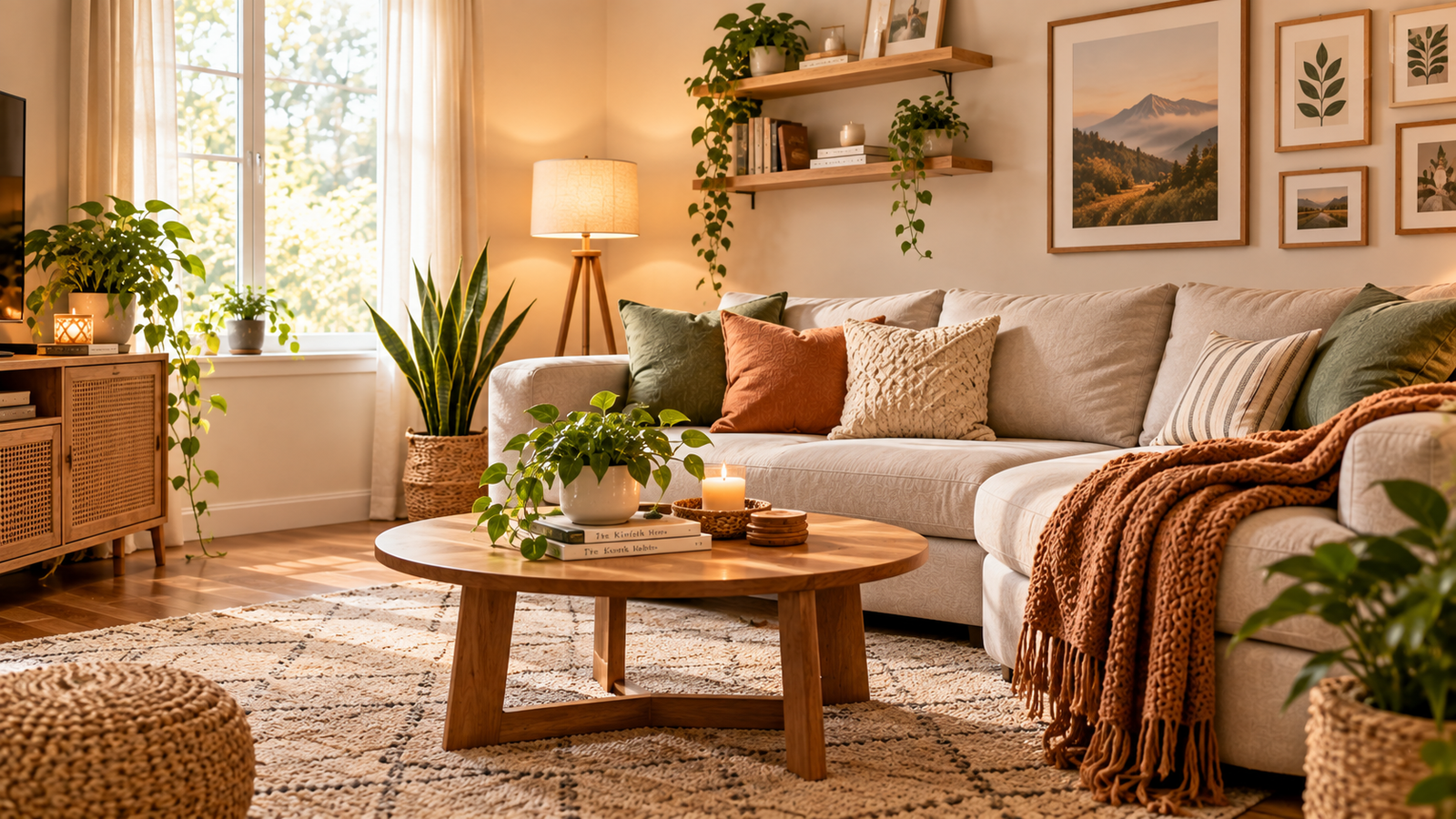
Your home should be more than just a place where you sleep and keep your belongings. It should be a space where you can relax, recharge, spend time with family, and enjoy your everyday life.
Making your home more comfortable does not necessarily require expensive furniture, major renovations, or a complete change in your decor. Small improvements to lighting, furniture, temperature, organization, and personal details can make a noticeable difference.
A comfortable home is also about how easily you can use the space. When your belongings have a place, your furniture supports your daily activities, and your rooms feel pleasant, everyday life becomes easier.
In this guide, we will explore simple ways to make your home more comfortable without spending a large amount of money.
1. Keep Your Home Clean and Organized
A clean and organized home can immediately feel more comfortable.
Clutter can make rooms feel crowded and make it harder to relax. Start by removing unnecessary items from visible surfaces such as tables, countertops, shelves, and floors.
Give everyday belongings a designated place so they are easier to put away.
You do not need to keep your home perfectly organized all the time. A simple daily reset can help you maintain a comfortable environment without spending hours cleaning.
2. Choose Comfortable Furniture
Furniture plays a major role in how comfortable your home feels.
A beautiful sofa or chair is not very useful if it is uncomfortable to sit on. When choosing furniture, consider how you actually use the room.
Choose seating that provides appropriate support and enough space for the people who use it.
In bedrooms, select a bed and mattress that support your sleeping needs. In a home office, choose a chair and desk setup that allows you to work comfortably.
Comfort should always be considered alongside appearance.
3. Improve Your Lighting
Lighting can completely change the atmosphere of a room.
Bright overhead lighting may be useful for certain activities, but softer lighting can make living spaces feel more relaxing.
Use a combination of general lighting, table lamps, floor lamps, and task lighting where appropriate.
Take advantage of natural light during the day by keeping windows clear and using curtains that can be opened easily.
Good lighting can make your home feel warmer and more welcoming.
4. Add Soft Textures
Soft textures can make rooms feel more comfortable and inviting.
Consider adding cushions, blankets, rugs, curtains, or other soft furnishings to living areas and bedrooms.
A soft throw blanket on a sofa can make the room feel more relaxing. An area rug can add warmth under your feet and help define a seating area.
Choose materials that are practical for your household and easy to maintain.
5. Create a Relaxing Bedroom
The bedroom should be one of the most comfortable areas of your home.
Keep the room organized and avoid unnecessary clutter around the bed.
Use comfortable bedding and pillows that suit your preferences. Choose curtains that provide the level of privacy and light control you need.
Soft, warm lighting can also create a more relaxing atmosphere in the evening.
Try to keep work-related items and unnecessary electronics away from the main sleeping area when practical.
6. Control the Temperature
A comfortable home needs a temperature that works well for the people living there.
Use heating or cooling systems appropriately and maintain them according to the manufacturer’s recommendations.
Fans can help improve air movement, while curtains and blinds can help manage sunlight entering the room.
During colder periods, blankets, rugs, and suitable window coverings can add warmth and comfort.
If your home has persistent temperature problems, investigate possible causes such as drafts or inadequate insulation.
7. Improve Air Quality
Fresh indoor air can make your home feel more pleasant.
Open windows when outdoor conditions allow and maintain appropriate ventilation in kitchens and bathrooms.
Regularly clean dusty surfaces and follow the maintenance recommendations for heating, cooling, and ventilation equipment.
Indoor plants can also add natural decoration, although they should not be considered a replacement for proper ventilation or air-quality management.
A clean and well-ventilated home generally feels fresher and more comfortable.
8. Add Indoor Plants
Plants can bring natural color and visual interest into your home.
Place plants in areas where they receive the type of light they need. Small plants can work well on shelves and tables, while larger plants can fill suitable empty corners.
Choose plants based on the amount of care you are able to provide.
If you do not want the maintenance associated with live plants, artificial plants can provide a similar decorative effect.
9. Use Comfortable Colors
Colors can influence the atmosphere of a room.
Soft neutrals, warm earth tones, gentle greens, and other calming shades can create a comfortable appearance.
You do not need to repaint your entire home. Add color through cushions, blankets, curtains, rugs, artwork, or other accessories.
Choose colors that you personally enjoy rather than following every decorating trend.
A comfortable home should reflect your preferences.
10. Create a Cozy Living Room
The living room is often one of the main areas for relaxing and spending time with family.
Arrange furniture so that people can comfortably talk, watch television, read, or perform other activities.
Keep frequently used items nearby but avoid covering every surface with belongings.
Add a comfortable rug, cushions, soft lighting, and a few personal decorations to create a welcoming atmosphere.
The goal is to make the room practical while keeping it visually calm.
11. Make Your Entryway More Practical
A comfortable home starts at the entrance.
A cluttered entryway can create stress as soon as you walk through the door.
Add hooks for coats and bags, a shoe rack, a small bench, or a basket for everyday items.
Give keys and other frequently used belongings a specific place.
A well-organized entryway makes leaving and returning home easier.
12. Keep Your Kitchen Functional
The kitchen should be easy to use, especially if you cook regularly.
Keep frequently used utensils, appliances, and ingredients within reasonable reach.
Remove unnecessary items from countertops and organize cabinets so that you can quickly find what you need.
A clean workspace can make cooking more enjoyable.
You can also create a small breakfast or coffee area if your kitchen has enough space.
13. Make Your Bathroom Feel Relaxing
Small changes can make a bathroom feel more comfortable.
Keep towels clean and easily accessible. Organize personal-care products so that countertops remain clear.
A soft bath mat, simple storage baskets, and pleasant lighting can improve the overall atmosphere.
Keep the bathroom properly ventilated and address leaks or moisture problems promptly.
The goal is to create a clean and functional space that feels pleasant to use.
14. Reduce Unnecessary Noise
Noise can make it difficult to relax, especially in busy homes or urban environments.
Soft furnishings such as rugs, curtains, and upholstered furniture can help reduce some room reflections.
Arrange furniture thoughtfully and consider closing doors between rooms when appropriate.
If outside noise is a problem, suitable curtains, window treatments, or other practical measures may help reduce its impact.
Creating a quieter area for reading or relaxing can also make your home feel more peaceful.
15. Create a Personal Relaxation Area
You do not need a large room to create a place where you can relax.
Choose a comfortable chair, a small table, and a lamp in a quiet corner.
Use this area for reading, listening to music, drinking tea, or simply taking a break.
Personalizing one small area can give you a dedicated place to unwind without changing the entire home.
16. Keep Everyday Items Easy to Reach
A comfortable home should make everyday tasks easier.
Store frequently used items in convenient locations. Keep kitchen tools near the areas where you use them and place frequently worn clothing where it is easy to access.
Avoid storing everyday belongings in difficult-to-reach places simply to make the room look cleaner.
Good organization should support your lifestyle rather than make daily tasks more complicated.
17. Improve Your Home Office
If you work or study at home, your workspace can affect your overall comfort.
Choose a desk that provides enough room for your equipment and supplies.
Keep cables organized and remove unnecessary objects from the workspace.
Use appropriate lighting and adjust your chair and desk setup so that you can work comfortably.
A simple plant or piece of artwork can also make the workspace feel more personal.
18. Add Personal Decorations
A comfortable home should feel like your own.
Display family photographs, artwork, travel memories, books, or other meaningful objects.
You do not need to cover every wall or shelf. A few carefully selected personal items can make a space feel more welcoming.
Decorate based on what you genuinely enjoy rather than trying to make your home look exactly like someone else’s.
19. Use Rugs for Warmth and Comfort
Rugs can make hard floors feel warmer and more comfortable.
They can also help define different areas within an open room.
Choose a rug that is appropriate for the size and purpose of the room.
In bedrooms, a soft rug beside or underneath the bed can make getting up in the morning more comfortable.
In living rooms, position the rug so that it works naturally with the seating arrangement.
20. Keep Blankets Within Reach
Blankets are a simple way to make living areas more comfortable.
Place one or two neatly folded blankets in a basket or over the back of a sofa.
This keeps them accessible when you want to relax without creating clutter.
Choose materials that are comfortable and easy to wash.
21. Make Your Home Smell Fresh
A fresh-smelling home can contribute to a pleasant atmosphere.
Regular cleaning, proper ventilation, and taking out waste on time are more important than simply covering odors with fragrances.
If you use candles, diffusers, or other scented products, use them according to their safety instructions and make sure they are appropriate for your household.
A clean home should smell naturally fresh rather than heavily scented.
22. Make Storage Easier
Storage affects comfort more than many people realize.
When belongings are difficult to find, everyday tasks take longer.
Use baskets, shelves, drawers, cabinets, and other storage solutions to keep frequently used items organized.
Avoid overfilling storage areas. If a closet or cabinet is packed too tightly, it becomes difficult to use.
Decluttering before adding storage can often make a bigger difference than buying more containers.
23. Keep Walkways Clear
Clear walking paths make a home easier and safer to use.
Avoid placing furniture, boxes, shoes, or other objects where people regularly walk.
In smaller rooms, pay particular attention to the space between furniture pieces.
A room with clear pathways usually feels more open and comfortable.
24. Create a Comfortable Outdoor Area
If you have a balcony, patio, porch, or garden area, consider making it part of your comfortable living space.
Add suitable outdoor seating, plants, cushions, or simple lighting.
Keep the area clean and organized.
Even a small outdoor space can provide a pleasant place to enjoy fresh air, read, or spend time with family.
25. Maintain Your Home Regularly
Small maintenance problems can gradually reduce comfort.
Fix dripping faucets, damaged handles, loose hardware, sticking doors, and other minor problems when possible.
Regularly check areas that require maintenance and follow the manufacturer’s instructions for appliances and home systems.
Taking care of small issues early can help prevent them from becoming larger problems.
How to Make Your Home More Comfortable on a Budget
You do not need a large budget to improve comfort.
Start with free changes such as rearranging furniture, decluttering rooms, cleaning windows, organizing shelves, and making better use of natural light.
Then focus on affordable improvements such as cushions, rugs, lamps, storage baskets, plants, and curtains.
Make one change at a time and evaluate how it improves your daily experience.
Comfort is not about how much money you spend. It is about how well your home supports the way you live.
Common Mistakes That Can Make a Home Less Comfortable
One common mistake is prioritizing appearance over functionality.
A room may look beautiful in photographs but still be uncomfortable if there is not enough seating, storage, lighting, or walking space.
Another mistake is filling every empty area with furniture and decorations.
Empty space can help a room feel calmer and easier to use.
Ignoring maintenance problems can also reduce comfort. Small leaks, damaged furniture, poor ventilation, or faulty fixtures should be addressed appropriately.
Finally, avoid trying to make every room follow the same style. Each space can have its own purpose while still feeling connected to the rest of the home.
Final Thoughts
Making your home more comfortable does not require a major renovation or a large decorating budget.
Start with the basics: keep your home clean, reduce clutter, choose comfortable furniture, improve lighting, manage temperature, and create practical storage.
Then add personal touches such as plants, cushions, rugs, artwork, blankets, and meaningful decorations.
The most comfortable home is not necessarily the biggest or most expensive one. It is a space that feels organized, practical, welcoming, and suited to the people who live there.
Small improvements made consistently can transform the way your home feels and make everyday life more enjoyable.
Your home should be more than just a place where you sleep and keep your belongings. It should be a space where you can relax, recharge, spend time with family, and enjoy your everyday life.
Making your home more comfortable does not necessarily require expensive furniture, major renovations, or a complete change in your decor. Small improvements to lighting, furniture, temperature, organization, and personal details can make a noticeable difference.
A comfortable home is also about how easily you can use the space. When your belongings have a place, your furniture supports your daily activities, and your rooms feel pleasant, everyday life becomes easier.
In this guide, we will explore simple ways to make your home more comfortable without spending a large amount of money.
1. Keep Your Home Clean and Organized
A clean and organized home can immediately feel more comfortable.
Clutter can make rooms feel crowded and make it harder to relax. Start by removing unnecessary items from visible surfaces such as tables, countertops, shelves, and floors.
Give everyday belongings a designated place so they are easier to put away.
You do not need to keep your home perfectly organized all the time. A simple daily reset can help you maintain a comfortable environment without spending hours cleaning.
2. Choose Comfortable Furniture
Furniture plays a major role in how comfortable your home feels.
A beautiful sofa or chair is not very useful if it is uncomfortable to sit on. When choosing furniture, consider how you actually use the room.
Choose seating that provides appropriate support and enough space for the people who use it.
In bedrooms, select a bed and mattress that support your sleeping needs. In a home office, choose a chair and desk setup that allows you to work comfortably.
Comfort should always be considered alongside appearance.
3. Improve Your Lighting
Lighting can completely change the atmosphere of a room.
Bright overhead lighting may be useful for certain activities, but softer lighting can make living spaces feel more relaxing.
Use a combination of general lighting, table lamps, floor lamps, and task lighting where appropriate.
Take advantage of natural light during the day by keeping windows clear and using curtains that can be opened easily.
Good lighting can make your home feel warmer and more welcoming.
4. Add Soft Textures
Soft textures can make rooms feel more comfortable and inviting.
Consider adding cushions, blankets, rugs, curtains, or other soft furnishings to living areas and bedrooms.
A soft throw blanket on a sofa can make the room feel more relaxing. An area rug can add warmth under your feet and help define a seating area.
Choose materials that are practical for your household and easy to maintain.
5. Create a Relaxing Bedroom
The bedroom should be one of the most comfortable areas of your home.
Keep the room organized and avoid unnecessary clutter around the bed.
Use comfortable bedding and pillows that suit your preferences. Choose curtains that provide the level of privacy and light control you need.
Soft, warm lighting can also create a more relaxing atmosphere in the evening.
Try to keep work-related items and unnecessary electronics away from the main sleeping area when practical.
6. Control the Temperature
A comfortable home needs a temperature that works well for the people living there.
Use heating or cooling systems appropriately and maintain them according to the manufacturer’s recommendations.
Fans can help improve air movement, while curtains and blinds can help manage sunlight entering the room.
During colder periods, blankets, rugs, and suitable window coverings can add warmth and comfort.
If your home has persistent temperature problems, investigate possible causes such as drafts or inadequate insulation.
7. Improve Air Quality
Fresh indoor air can make your home feel more pleasant.
Open windows when outdoor conditions allow and maintain appropriate ventilation in kitchens and bathrooms.
Regularly clean dusty surfaces and follow the maintenance recommendations for heating, cooling, and ventilation equipment.
Indoor plants can also add natural decoration, although they should not be considered a replacement for proper ventilation or air-quality management.
A clean and well-ventilated home generally feels fresher and more comfortable.
8. Add Indoor Plants
Plants can bring natural color and visual interest into your home.
Place plants in areas where they receive the type of light they need. Small plants can work well on shelves and tables, while larger plants can fill suitable empty corners.
Choose plants based on the amount of care you are able to provide.
If you do not want the maintenance associated with live plants, artificial plants can provide a similar decorative effect.
9. Use Comfortable Colors
Colors can influence the atmosphere of a room.
Soft neutrals, warm earth tones, gentle greens, and other calming shades can create a comfortable appearance.
You do not need to repaint your entire home. Add color through cushions, blankets, curtains, rugs, artwork, or other accessories.
Choose colors that you personally enjoy rather than following every decorating trend.
A comfortable home should reflect your preferences.
10. Create a Cozy Living Room
The living room is often one of the main areas for relaxing and spending time with family.
Arrange furniture so that people can comfortably talk, watch television, read, or perform other activities.
Keep frequently used items nearby but avoid covering every surface with belongings.
Add a comfortable rug, cushions, soft lighting, and a few personal decorations to create a welcoming atmosphere.
The goal is to make the room practical while keeping it visually calm.
11. Make Your Entryway More Practical
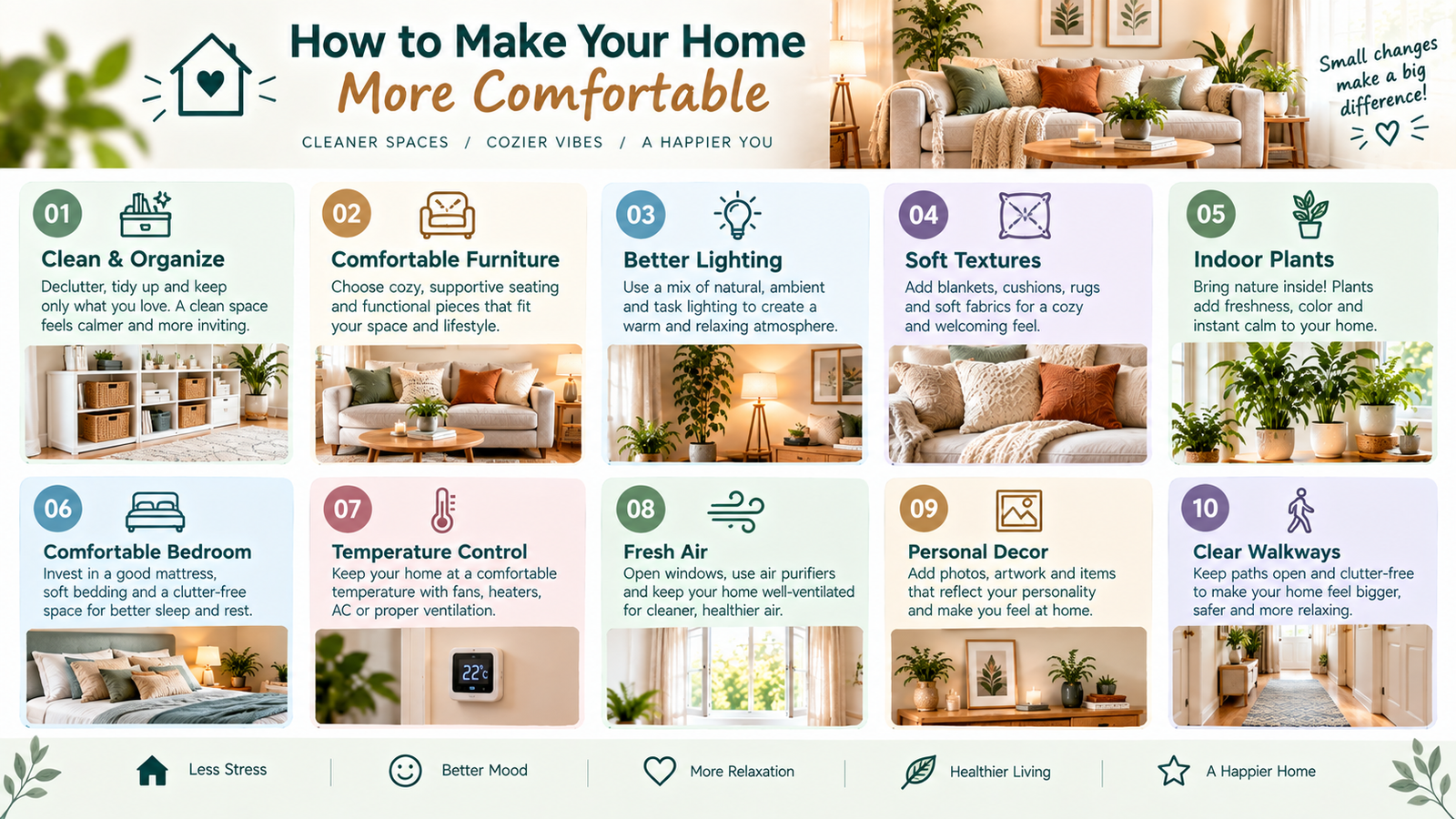
A comfortable home starts at the entrance.
A cluttered entryway can create stress as soon as you walk through the door.
Add hooks for coats and bags, a shoe rack, a small bench, or a basket for everyday items.
Give keys and other frequently used belongings a specific place.
A well-organized entryway makes leaving and returning home easier.
12. Keep Your Kitchen Functional
The kitchen should be easy to use, especially if you cook regularly.
Keep frequently used utensils, appliances, and ingredients within reasonable reach.
Remove unnecessary items from countertops and organize cabinets so that you can quickly find what you need.
A clean workspace can make cooking more enjoyable.
You can also create a small breakfast or coffee area if your kitchen has enough space.
13. Make Your Bathroom Feel Relaxing
Small changes can make a bathroom feel more comfortable.
Keep towels clean and easily accessible. Organize personal-care products so that countertops remain clear.
A soft bath mat, simple storage baskets, and pleasant lighting can improve the overall atmosphere.
Keep the bathroom properly ventilated and address leaks or moisture problems promptly.
The goal is to create a clean and functional space that feels pleasant to use.
14. Reduce Unnecessary Noise
Noise can make it difficult to relax, especially in busy homes or urban environments.
Soft furnishings such as rugs, curtains, and upholstered furniture can help reduce some room reflections.
Arrange furniture thoughtfully and consider closing doors between rooms when appropriate.
If outside noise is a problem, suitable curtains, window treatments, or other practical measures may help reduce its impact.
Creating a quieter area for reading or relaxing can also make your home feel more peaceful.
15. Create a Personal Relaxation Area
You do not need a large room to create a place where you can relax.
Choose a comfortable chair, a small table, and a lamp in a quiet corner.
Use this area for reading, listening to music, drinking tea, or simply taking a break.
Personalizing one small area can give you a dedicated place to unwind without changing the entire home.
16. Keep Everyday Items Easy to Reach
A comfortable home should make everyday tasks easier.
Store frequently used items in convenient locations. Keep kitchen tools near the areas where you use them and place frequently worn clothing where it is easy to access.
Avoid storing everyday belongings in difficult-to-reach places simply to make the room look cleaner.
Good organization should support your lifestyle rather than make daily tasks more complicated.
17. Improve Your Home Office
If you work or study at home, your workspace can affect your overall comfort.
Choose a desk that provides enough room for your equipment and supplies.
Keep cables organized and remove unnecessary objects from the workspace.
Use appropriate lighting and adjust your chair and desk setup so that you can work comfortably.
A simple plant or piece of artwork can also make the workspace feel more personal.
18. Add Personal Decorations
A comfortable home should feel like your own.
Display family photographs, artwork, travel memories, books, or other meaningful objects.
You do not need to cover every wall or shelf. A few carefully selected personal items can make a space feel more welcoming.
Decorate based on what you genuinely enjoy rather than trying to make your home look exactly like someone else’s.
19. Use Rugs for Warmth and Comfort
Rugs can make hard floors feel warmer and more comfortable.
They can also help define different areas within an open room.
Choose a rug that is appropriate for the size and purpose of the room.
In bedrooms, a soft rug beside or underneath the bed can make getting up in the morning more comfortable.
In living rooms, position the rug so that it works naturally with the seating arrangement.
20. Keep Blankets Within Reach
Blankets are a simple way to make living areas more comfortable.
Place one or two neatly folded blankets in a basket or over the back of a sofa.
This keeps them accessible when you want to relax without creating clutter.
Choose materials that are comfortable and easy to wash.
21. Make Your Home Smell Fresh
A fresh-smelling home can contribute to a pleasant atmosphere.
Regular cleaning, proper ventilation, and taking out waste on time are more important than simply covering odors with fragrances.
If you use candles, diffusers, or other scented products, use them according to their safety instructions and make sure they are appropriate for your household.
A clean home should smell naturally fresh rather than heavily scented.
22. Make Storage Easier
Storage affects comfort more than many people realize.
When belongings are difficult to find, everyday tasks take longer.
Use baskets, shelves, drawers, cabinets, and other storage solutions to keep frequently used items organized.
Avoid overfilling storage areas. If a closet or cabinet is packed too tightly, it becomes difficult to use.
Decluttering before adding storage can often make a bigger difference than buying more containers.
23. Keep Walkways Clear
Clear walking paths make a home easier and safer to use.
Avoid placing furniture, boxes, shoes, or other objects where people regularly walk.
In smaller rooms, pay particular attention to the space between furniture pieces.
A room with clear pathways usually feels more open and comfortable.
24. Create a Comfortable Outdoor Area
If you have a balcony, patio, porch, or garden area, consider making it part of your comfortable living space.
Add suitable outdoor seating, plants, cushions, or simple lighting.
Keep the area clean and organized.
Even a small outdoor space can provide a pleasant place to enjoy fresh air, read, or spend time with family.
25. Maintain Your Home Regularly
Small maintenance problems can gradually reduce comfort.
Fix dripping faucets, damaged handles, loose hardware, sticking doors, and other minor problems when possible.
Regularly check areas that require maintenance and follow the manufacturer’s instructions for appliances and home systems.
Taking care of small issues early can help prevent them from becoming larger problems.
How to Make Your Home More Comfortable on a Budget
You do not need a large budget to improve comfort.
Start with free changes such as rearranging furniture, decluttering rooms, cleaning windows, organizing shelves, and making better use of natural light.
Then focus on affordable improvements such as cushions, rugs, lamps, storage baskets, plants, and curtains.
Make one change at a time and evaluate how it improves your daily experience.
Comfort is not about how much money you spend. It is about how well your home supports the way you live.
Common Mistakes That Can Make a Home Less Comfortable
One common mistake is prioritizing appearance over functionality.
A room may look beautiful in photographs but still be uncomfortable if there is not enough seating, storage, lighting, or walking space.
Another mistake is filling every empty area with furniture and decorations.
Empty space can help a room feel calmer and easier to use.
Ignoring maintenance problems can also reduce comfort. Small leaks, damaged furniture, poor ventilation, or faulty fixtures should be addressed appropriately.
Finally, avoid trying to make every room follow the same style. Each space can have its own purpose while still feeling connected to the rest of the home.
Final Thoughts
Making your home more comfortable does not require a major renovation or a large decorating budget.
Start with the basics: keep your home clean, reduce clutter, choose comfortable furniture, improve lighting, manage temperature, and create practical storage.
Then add personal touches such as plants, cushions, rugs, artwork, blankets, and meaningful decorations.
The most comfortable home is not necessarily the biggest or most expensive one. It is a space that feels organized, practical, welcoming, and suited to the people who live there.
Small improvements made consistently can transform the way your home feels and make everyday life more enjoyable.