

Keeping a home clean can feel difficult when you have a busy schedule. Work, family, school, errands, and daily responsibilities can leave very little time for cleaning. By the end of the day, dishes may be waiting in the kitchen, clothes may be scattered around the bedroom, and dust may start collecting on different surfaces.
The good news is that you do not need to spend several hours cleaning every day. A simple routine, smart habits, and a few practical cleaning methods can make it much easier to maintain a tidy and comfortable home.
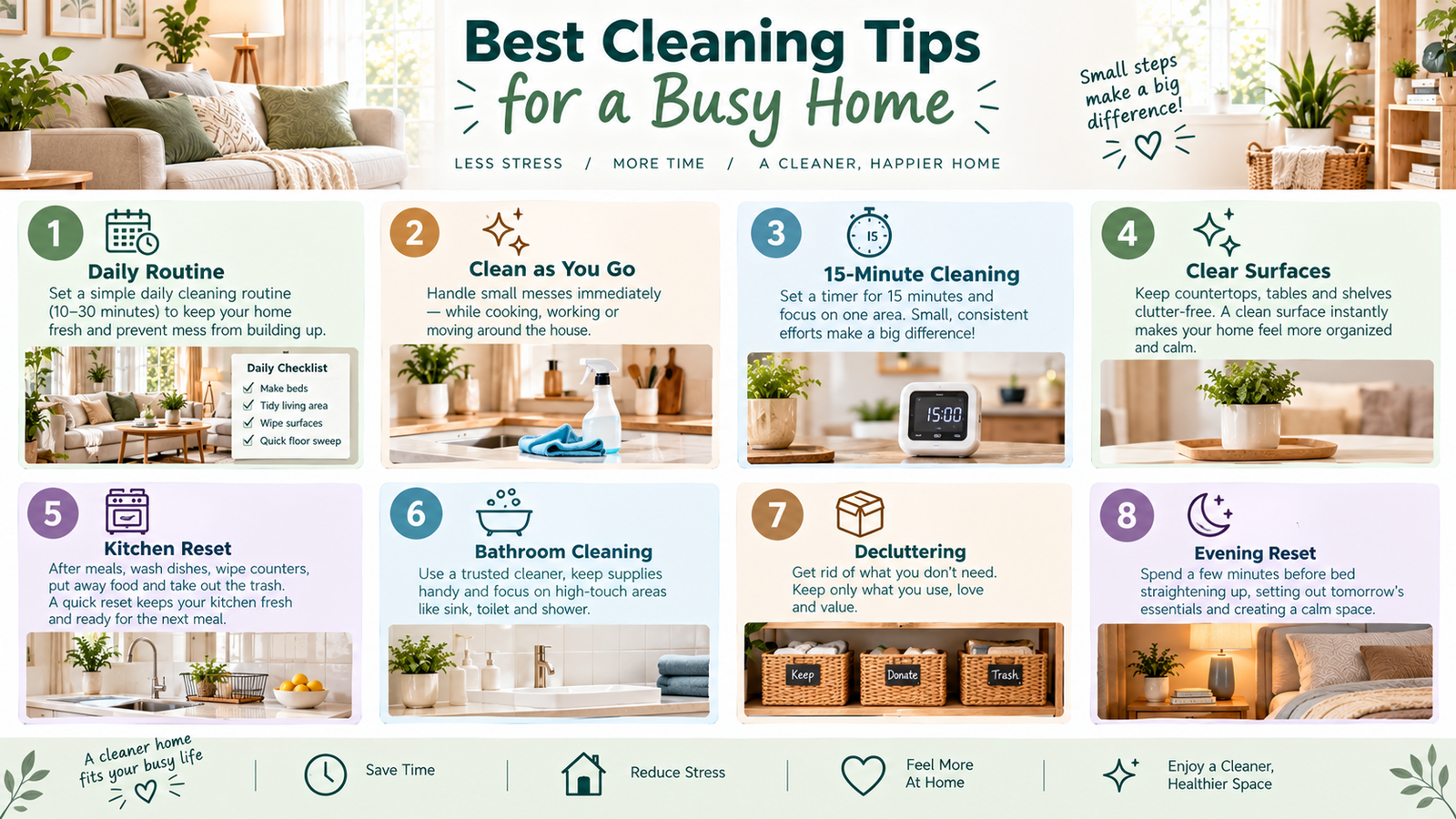
Instead of waiting for your home to become messy and then doing a large cleaning session, focus on small tasks that can be completed regularly. Here are some of the best cleaning tips for a busy home.
1. Create a Simple Cleaning Routine
The first step is to create a cleaning routine that fits your schedule. You do not need to clean everything every day.
Divide cleaning tasks into three groups: daily, weekly, and monthly.
Daily tasks can include washing dishes, wiping kitchen counters, putting things away, and making the bed. Weekly tasks can include vacuuming, mopping, cleaning bathrooms, and changing bed sheets. Monthly tasks can include cleaning windows, organizing cabinets, and cleaning less-used areas.
A simple schedule prevents cleaning from becoming overwhelming.
2. Clean for 10 to 15 Minutes
You do not always need a full hour to make progress. Set a timer for 10 or 15 minutes and clean one area as quickly as possible.
For example, you could spend 10 minutes organizing the living room or wiping kitchen surfaces. Even a short cleaning session can make a noticeable difference.
Small cleaning sessions are especially useful on busy weekdays when you have limited time.
3. Clean as You Go
One of the easiest ways to reduce cleaning work is to clean items immediately after using them.
Wash dishes after meals instead of leaving them in the sink. Wipe spills when they happen. Put clothes away after changing. Return books, chargers, and other items to their usual places.
Cleaning as you go prevents small messes from becoming large cleaning jobs later.
4. Keep Cleaning Supplies Easy to Reach
If your cleaning products are difficult to find, you may be less likely to clean regularly.
Keep basic supplies in convenient locations. For example, bathroom cleaning products can be stored near the bathroom, while kitchen cleaning supplies can stay in an easily accessible cabinet.
You can also keep a small cleaning basket with commonly used items such as microfiber cloths, a suitable surface cleaner, gloves, and sponges.
Always follow product labels and avoid mixing cleaning chemicals unless the manufacturer specifically says they are safe to combine.
5. Focus on High-Traffic Areas
Busy homes do not need every area cleaned with the same frequency.
Focus first on places that receive the most daily use. These usually include the kitchen, bathroom, living room, entryway, and frequently used floors.
Cleaning these areas regularly can make the entire home feel cleaner even if some less-used spaces are not cleaned as often.
6. Keep the Kitchen Clean Every Day
The kitchen can become messy very quickly. Food preparation, dishes, spills, and crumbs can create extra work if they are ignored.
After preparing meals, wipe the counters and clean visible spills. Wash or load dishes and sweep crumbs from the floor.
At the end of the day, try to leave the kitchen reasonably clean. Starting the next morning with an organized kitchen can make your daily routine feel much easier.
7. Make the Bed Every Morning
Making the bed takes only a few minutes but can make the bedroom look much more organized.
It also creates a simple daily habit that gives you an early sense of accomplishment.
If you have children, encourage them to make their own beds as part of their morning routine. Simple responsibilities can help keep the entire household organized.
8. Use the One-Minute Rule
If a cleaning or organizing task takes about a minute, do it immediately.
Put a cup in the kitchen, hang up a jacket, throw away unnecessary paper, or return an item to its place instead of postponing it.
These small decisions can prevent clutter from building up throughout the day.
9. Keep Surfaces Clear
Clear surfaces are easier to clean and usually make a home look tidier.
Try not to fill tables, kitchen counters, desks, and other surfaces with unnecessary items. Give frequently used objects a specific place.
A clear surface also makes quick wiping much easier because you do not have to move many objects first.
10. Use Baskets for Quick Organization
Storage baskets can be useful in busy homes because they make it easier to collect and organize everyday items.
You can use baskets for toys, blankets, magazines, accessories, or other frequently used belongings.
If you are short on time, a basket can also be used temporarily to collect items that belong in different rooms. You can put everything away later when you have more time.
However, avoid turning baskets into permanent clutter containers. Sort their contents regularly.
11. Follow a Room-by-Room Approach
Cleaning the entire home at once can feel overwhelming. Instead, focus on one room or area at a time.
For example, you might clean the kitchen on Monday, bedrooms on Tuesday, bathrooms on Wednesday, and the living room on Thursday.
This approach makes larger cleaning tasks easier to manage and gives you a clear starting point.
12. Use a Top-to-Bottom Cleaning Method
When cleaning a room, start with higher surfaces and work downward.
Dust shelves, furniture, and other elevated surfaces first. Then clean tables and lower surfaces before finishing with the floor.
This method helps prevent dust and debris from falling onto areas you have already cleaned.
13. Vacuum and Mop High-Use Floors Regularly
Floors can quickly collect dust, dirt, crumbs, and hair, especially in homes with children or pets.
You do not necessarily need to deep-clean every floor every day. Focus on high-traffic areas and clean them according to how quickly they become dirty.
Vacuuming regularly can reduce the amount of dirt that builds up, while mopping can help maintain hard floors.
14. Keep the Bathroom Under Control
Bathrooms can become difficult to clean when dirt and buildup are allowed to accumulate.
After showers, consider keeping surfaces as dry as practical and removing visible water from suitable surfaces. Wipe sinks regularly and clean the toilet and other bathroom surfaces according to your normal schedule.
A quick bathroom reset can take only a few minutes and may reduce the need for longer cleaning sessions later.
15. Declutter While Cleaning
Cleaning is a good opportunity to remove things you no longer need.
If you find broken items, expired products, unused clothes, or unnecessary paperwork, place them in separate categories for disposal, recycling, donation, or another appropriate action.
Reducing the number of unnecessary items in your home can make future cleaning much easier.
16. Use Microfiber Cloths
Microfiber cloths are useful for many everyday cleaning tasks. They can be used on suitable surfaces to remove dust, fingerprints, and everyday dirt.
Keep several clean cloths available so you do not have to wash one after every small task.
Use separate cloths or follow appropriate hygiene practices for kitchens, bathrooms, and other areas where cross-contamination could be a concern.
17. Make Cleaning Part of Your Daily Habits
Cleaning becomes easier when it is connected to activities you already do.
For example, wipe the bathroom sink after brushing your teeth, clean the kitchen counter after breakfast, or quickly organize the living room before going to bed.
These small habits require very little extra time but can prevent mess from accumulating.
18. Involve Everyone in the Household
One person does not have to handle every cleaning task.
If you live with family members or roommates, divide responsibilities based on age, ability, schedule, and living arrangements.
Children can help with simple age-appropriate tasks such as putting toys away, making their beds, or placing clothes in the laundry area.
When everyone contributes, maintaining a clean home becomes much easier.
19. Use a Laundry Schedule
Laundry can quickly become overwhelming if it is allowed to pile up.
Instead of waiting until there is a huge amount of laundry, create a schedule that works for your household.
For example, you might wash certain types of clothing on specific days. Folding and putting clothes away soon after they are dry can also prevent clean laundry from becoming another source of clutter.
20. Do a Quick Evening Reset
A short evening reset can help you start the next day with a cleaner home.
Spend 10 to 15 minutes putting items away, clearing surfaces, washing dishes, and preparing commonly used areas for the morning.
You do not need to make the home perfect. The goal is simply to return important areas to a reasonably organized condition.
21. Do Not Try to Make Everything Perfect
One of the biggest mistakes busy homeowners make is expecting a perfectly clean home all the time.
A home is meant to be lived in. Some clutter and everyday mess are normal.
Focus on cleanliness, comfort, and functionality rather than perfection. A realistic routine that you can maintain is more useful than an intense routine that becomes impossible to follow.
22. Create a Weekly Cleaning Checklist
A simple checklist can help you remember important tasks without constantly thinking about what needs to be done.
Your weekly checklist might include:
- Vacuuming floors
- Mopping hard floors
- Cleaning bathrooms
- Changing bed sheets
- Dusting furniture
- Cleaning kitchen surfaces
- Emptying trash
- Washing towels
- Organizing cluttered areas
Adjust the checklist according to the needs of your home.
23. Clean Before Clutter Builds Up
The easiest mess to clean is usually the mess that has not had time to grow.
If you notice an area becoming cluttered, spend a few minutes fixing it before it becomes a bigger project.
For example, putting away five items today can be much easier than organizing fifty items at the end of the month.
24. Keep a Small Cleaning Station
A small cleaning station can make your routine faster. Keep commonly used supplies together in one container or designated location.
You might include microfiber cloths, appropriate surface-cleaning products, gloves, and other basic supplies.
Store cleaning products safely and keep them away from children and pets. Follow all product instructions for proper use and storage.
25. Build a Routine That Fits Your Lifestyle
Every household is different. A routine that works for one family may not work for another.
Consider your working hours, family responsibilities, pets, home size, and personal schedule when creating your cleaning routine.
The goal is not to spend more time cleaning. The goal is to make cleaning easier and more consistent.
Common Cleaning Mistakes to Avoid
Busy homeowners can accidentally make cleaning harder by using inefficient habits.
One common mistake is waiting until the home becomes extremely messy before starting. Another is trying to clean the entire house in one session.
Using too much cleaning product can also be unnecessary and may leave residue on surfaces. Always follow the product label and use only the recommended amount.
Another mistake is ignoring clutter. A room can be physically clean but still look messy when too many items are left out.
A Simple 15-Minute Daily Cleaning Plan
If your schedule is very busy, try this simple routine:
5 minutes: Clean the kitchen and wash or organize dishes.
5 minutes: Put away clutter from the living room or main area.
5 minutes: Tidy the bedroom, bathroom, or another high-use space.
You can adjust the tasks depending on what needs attention that day.
The purpose is not to complete every cleaning task. Instead, the goal is to prevent small messes from becoming large ones.
Final Thoughts
Keeping a busy home clean does not require spending hours every day with cleaning supplies. Small habits, simple routines, and consistent effort can make a major difference.
Focus on high-use areas, clean as you go, keep surfaces clear, involve household members, and break larger tasks into smaller sessions. A short daily reset can often be more manageable than waiting for a major cleaning day.
Most importantly, create a cleaning routine that fits your real lifestyle. Your home does not need to be perfect. It simply needs to be clean, comfortable, organized, and easy for you to maintain.