
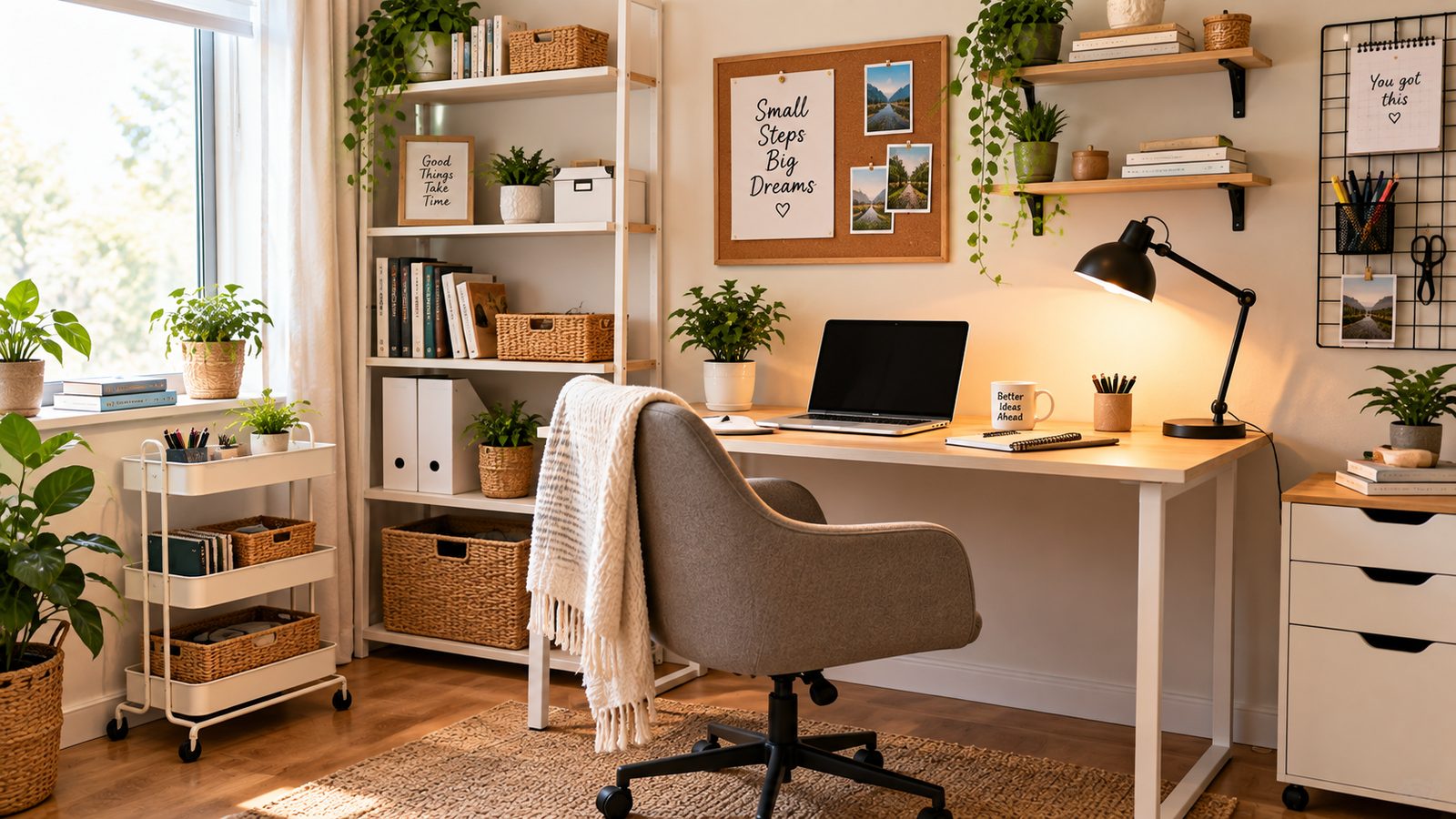
Creating a comfortable home office does not have to be expensive. Whether you work from home, run a small business, study online, or simply need a quiet place for personal projects, you can build a useful workspace without spending a lot of money.
The key is to focus on functionality rather than expensive furniture and decorations. A suitable desk, comfortable chair, good lighting, and proper organization can make a big difference.
If you have limited space or a small budget, these affordable home office ideas can help you create a practical and attractive workspace.
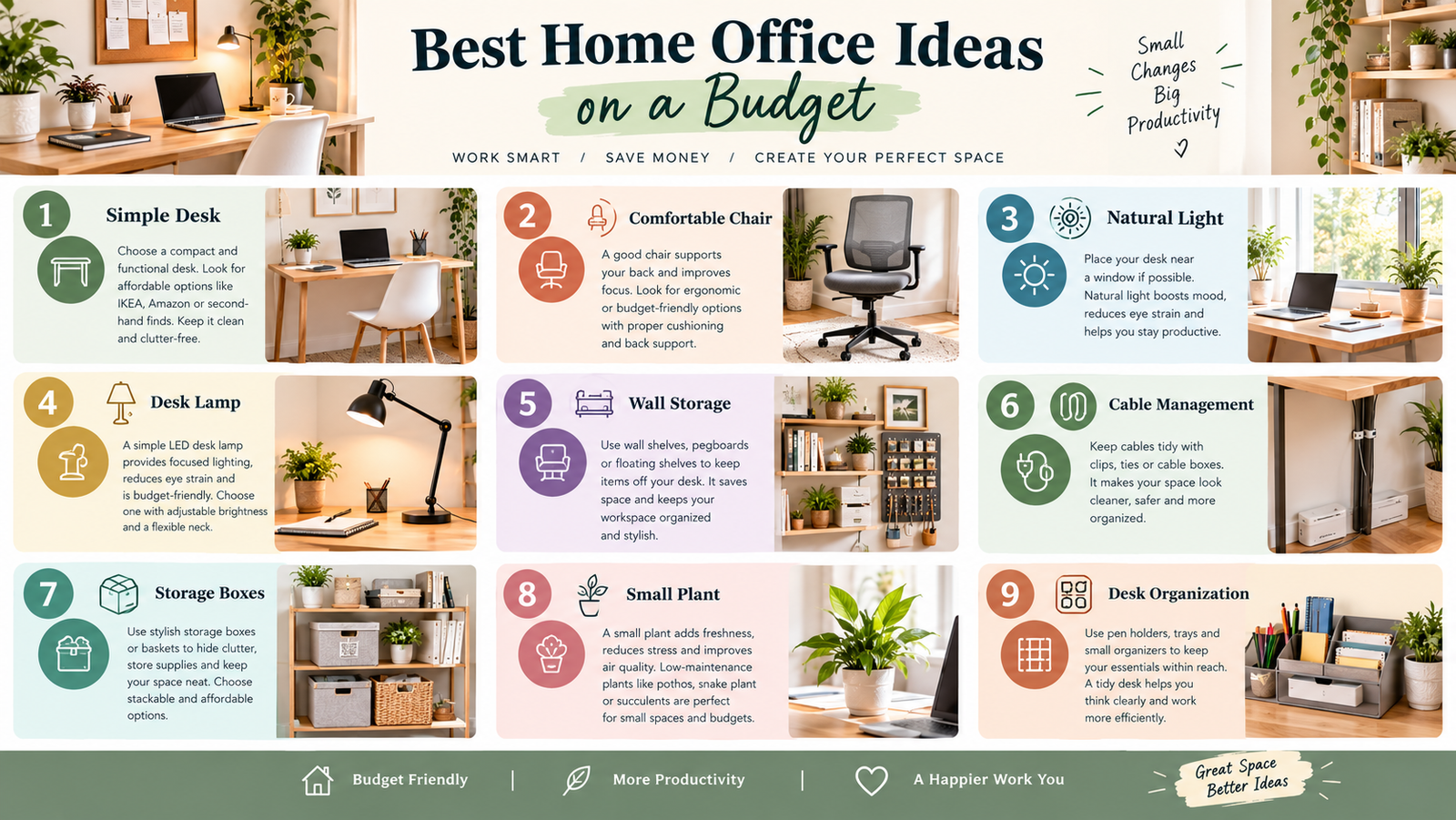
1. Choose a Simple Desk
You do not need an expensive office desk to create a functional workspace.
A simple table can work perfectly well if it provides enough room for your laptop, monitor, notebook, and other essentials.
Before buying a desk, measure the available space and choose a size that fits comfortably.
If your room is small, consider a narrow desk or wall-mounted table. These options can provide workspace without taking up too much floor space.
2. Use a Comfortable Chair
A chair is one area where comfort should be a priority.
Since you may spend several hours working or studying, choose a chair that provides good support and allows you to sit comfortably.
You do not necessarily need an expensive office chair. Look for a reasonably priced chair with suitable back support and adjustable features if possible.
You can also improve an existing chair with a simple cushion or back-support pillow.
3. Make Use of Natural Light
Natural light can make your workspace feel brighter and more comfortable.
If possible, place your desk near a window. This can provide free lighting during the day and make the room feel more pleasant.
However, avoid positioning your screen directly in front of a bright window if it creates glare.
Using natural light during the day can also reduce your dependence on artificial lighting.
4. Add an Affordable Desk Lamp
Good lighting is important when working in the evening or in a room with limited natural light.
Instead of buying expensive lighting equipment, choose a simple adjustable desk lamp.
An LED lamp can provide focused light while using relatively little energy.
Position the lamp so that it illuminates your workspace without creating reflections on your screen.
5. Use Wall Space
If your home office is small, use your walls for organization.
Floating shelves, pegboards, hooks, and simple wall organizers can provide storage without taking up valuable floor space.
You can use them for books, notebooks, office supplies, headphones, or decorative items.
Making use of vertical space can help keep your desk clear and organized.
6. Repurpose Furniture You Already Own
One of the easiest ways to save money is to use furniture you already have.
A dining table, small side table, or unused desk can become a home workspace.
You may also be able to reuse shelves, storage boxes, or cabinets from another room.
Before buying new furniture, look around your home and consider whether something you already own can serve a new purpose.
7. Keep Your Desk Organized
An organized desk can make your workspace feel more professional without costing much.
Use small containers for pens, cables, notebooks, and other supplies.
You can even reuse containers or boxes you already have at home.
Try to keep only the items you use regularly on the desk. Store everything else in drawers, shelves, or boxes.
8. Manage Your Cables
Messy cables can make even a nice workspace look disorganized.
Use inexpensive cable clips, ties, or organizers to keep charging cables and computer wires under control.
Group cables according to their purpose and label them if necessary.
Keeping cables organized also makes cleaning and troubleshooting easier.
9. Create a Simple Background
If you attend video meetings or create online content, your background can affect the appearance of your workspace.
You do not need an expensive backdrop.
A clean wall, bookshelf, plant, or simple piece of artwork can create a professional-looking background.
Keep the area behind your chair organized and avoid unnecessary clutter.
10. Add a Small Plant
A small indoor plant can make a home office feel more comfortable and welcoming.
You do not need to spend a lot of money on large plants. A small low-maintenance plant can work well on a desk or shelf.
If caring for a real plant is difficult, you can also choose a simple artificial plant.
The goal is to add a small decorative element without overcrowding your workspace.
11. Use Affordable Storage Boxes
Storage boxes can help keep documents, stationery, cables, and other supplies organized.
Choose boxes that fit under your desk, inside shelves, or in a nearby cabinet.
Labeling them can make it easier to find items when you need them.
Storage does not have to be expensive. Simple containers can often provide the same practical benefits as specialized office organizers.
12. Create a Dedicated Work Area
If you do not have a separate room for an office, create a dedicated workspace within another room.
A corner of a bedroom, living room, or dining area can become a practical office space.
Try to keep work-related items within that area so you can separate work from the rest of your home.
Even a small dedicated corner can make it easier to focus.
13. Use a Monitor Stand
If you use a desktop monitor, a monitor stand can provide additional desk organization.
It can raise the screen to a more comfortable viewing height and create storage space underneath.
You do not necessarily need to buy an expensive stand. A sturdy platform that safely supports your monitor may work as well.
Always make sure any DIY solution is stable and safe before placing equipment on it.
14. Keep Decorations Simple
Decorations can make a workspace more enjoyable, but you do not need many expensive items.
Choose a few things that make you feel comfortable and motivated.
A framed print, small plant, calendar, or simple desk accessory can add personality without creating clutter.
Keeping the design simple can also help maintain a clean working environment.
15. Set a Small Budget
Before buying anything for your home office, decide how much you can comfortably spend.
Make a list of the items you actually need and prioritize them.
For example, you might purchase a comfortable chair first and add shelves or decorative items later.
Building your workspace gradually can prevent unnecessary spending.
How to Build a Home Office for Less
The best way to create a budget-friendly home office is to focus on essentials.
Start with a suitable workspace and comfortable seating. Then improve lighting and organization.
Once the basic setup is complete, you can add optional items such as shelves, plants, artwork, and decorative accessories.
You do not need to complete everything at once.
A workspace can evolve over time as you discover what works best for your routine.
Common Budget Home Office Mistakes
One common mistake is buying too much furniture before measuring the available space.
Another mistake is focusing on appearance while ignoring comfort and functionality.
Spending money on unnecessary decorations can also quickly increase your budget.
It is better to invest in the things you use every day and add decorative elements gradually.
Finally, avoid creating a workspace that is too crowded. A clean desk with enough room to work is often more useful than a workspace filled with accessories.
Final Thoughts
A great home office does not require a large budget. With some creativity and careful planning, you can create a comfortable and productive workspace using affordable furniture and items you already have.
Start with the essentials: a suitable desk, comfortable chair, proper lighting, and basic organization.
Then improve the workspace gradually with storage solutions, cable management, plants, and simple decorations.
The goal is not to create the most expensive office. It is to create a workspace that helps you stay comfortable, organized, and focused while working from home.