
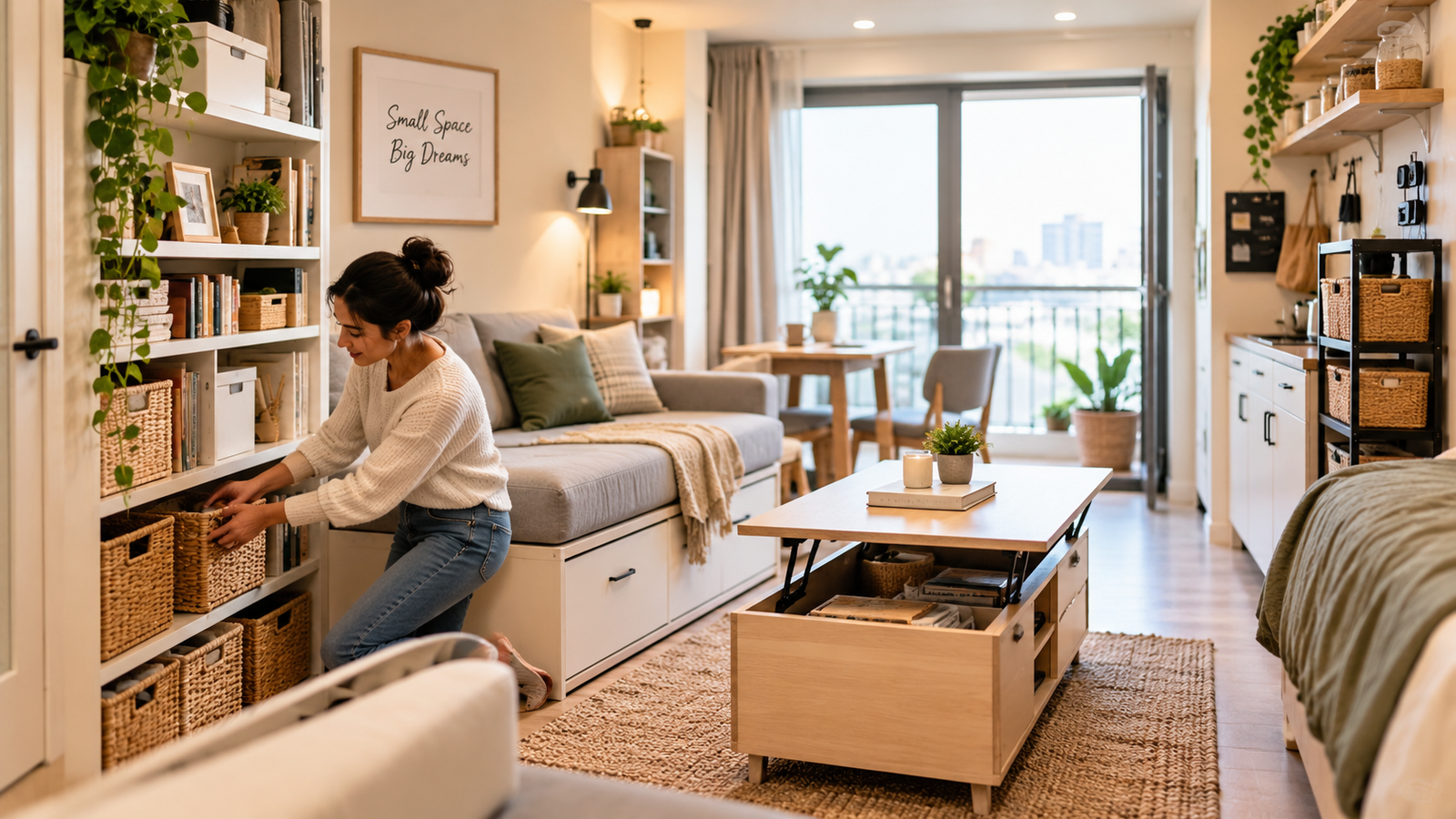
Living in a small home can be comfortable, but keeping everything organized can sometimes feel difficult. Limited floor space, small closets, and crowded rooms can quickly make a home look messy. The good news is that you do not need a larger house to create an organized and comfortable space.
With the right organization ideas, you can make better use of the space you already have. Simple changes such as using vertical storage, organizing drawers, and choosing multifunctional furniture can make a noticeable difference.
Whether you live in a small apartment, studio, dorm room, or compact house, these practical home organization ideas can help you reduce clutter and make your space easier to manage.
1. Use Vertical Space
One of the easiest ways to organize a small home is to use the walls.
When floor space is limited, look upward. Wall-mounted shelves, hooks, pegboards, and hanging organizers can provide additional storage without taking up much floor area.
You can use wall shelves for books, plants, decorative items, kitchen supplies, or everyday essentials. Hooks can also be useful near entrances, in bathrooms, bedrooms, and kitchens.
Using vertical space allows you to keep frequently used items accessible while leaving more room on the floor.
2. Choose Multi-Functional Furniture
Furniture can take up a significant amount of space in a small home. Choosing furniture that serves more than one purpose can help solve this problem.
For example, an ottoman with hidden storage can provide seating while also storing blankets or other items. A bed with built-in drawers can provide additional bedroom storage.
A folding table can also be useful because you can open it when needed and fold it away afterward.
Before buying new furniture, consider whether it can perform multiple functions.
3. Organize Your Closet
A small closet can quickly become overcrowded if it is not organized properly.
Start by removing clothing and accessories that you no longer use. Then divide the remaining items into categories such as shirts, pants, jackets, shoes, and accessories.
Slim hangers can help create additional hanging space. Shelf organizers and storage boxes can also make it easier to use the available space efficiently.
Keep frequently used clothing where it is easy to reach and place seasonal items in less accessible areas.
4. Use Storage Boxes and Baskets
Storage boxes and baskets are simple but effective organization tools.
They can help keep small items together instead of allowing them to spread across shelves, tables, and floors.
Use labeled boxes for documents, cables, toys, accessories, seasonal decorations, or other items.
Baskets can also make open shelves look cleaner while keeping everyday objects organized.
Choose storage containers that fit your shelves and cabinets so you do not waste valuable space.
5. Make Better Use of Under-Bed Space
The area under your bed is often overlooked.
If your bed has enough clearance, you can use storage containers underneath it for items that you do not need every day.
This space can be useful for storing seasonal clothing, extra bedding, shoes, luggage, or other belongings.
Using under-bed storage can reduce pressure on your closet and other storage areas.
6. Keep Your Kitchen Organized
Small kitchens can become crowded very quickly because they contain many different items.
Start by keeping frequently used kitchen tools in easily accessible locations. Use drawer dividers to separate utensils and install shelves or organizers inside cabinets when appropriate.
You can also use wall-mounted racks for items such as cooking utensils.
Another useful strategy is to avoid keeping duplicate items that you rarely use. Removing unnecessary kitchen equipment can free up valuable cabinet and counter space.
7. Use the Space Behind Doors
The back of a door can provide useful storage space.
Over-the-door organizers can be used in bedrooms, bathrooms, kitchens, and closets.
Depending on the room, you can use them for shoes, cleaning supplies, toiletries, accessories, or small household items.
This is especially useful because it creates additional storage without requiring more floor space.
8. Declutter Regularly
Organization becomes much easier when you have fewer unnecessary items.
Set aside some time every few weeks to review your belongings. Ask yourself whether you actually use each item or whether you are keeping it simply because you might need it someday.
Items that you no longer need can be donated, recycled, sold, or properly discarded.
Regular decluttering prevents small spaces from becoming overcrowded again.
9. Use Drawer Dividers
Drawers can quickly become messy when different items are placed together.
Drawer dividers can separate socks, accessories, kitchen utensils, office supplies, and other small objects.
Instead of searching through a messy drawer, you will know exactly where each item belongs.
Even simple homemade dividers can work if you do not want to purchase specialized organizers.
10. Create a Dedicated Entryway Area
Small homes often do not have a large entrance area, but creating a small organization zone can prevent clutter.
Install a few wall hooks for coats, bags, and keys. A small shoe rack can help keep footwear organized.
You can also place a small basket near the entrance for items that need to be taken outside.
Having a dedicated place for everyday items makes it easier to keep the rest of your home tidy.
11. Keep Surfaces Clear
Tables, counters, and other flat surfaces can quickly become collection points for clutter.
Try to keep only the items you use regularly on visible surfaces.
For example, instead of leaving mail, keys, chargers, and other objects scattered across a table, create specific storage locations for them.
Clear surfaces can make a small room feel more spacious and organized.
12. Use Furniture With Hidden Storage
Hidden storage is especially useful when you want your home to look clean.
Beds, benches, coffee tables, ottomans, and other furniture can sometimes include storage compartments.
These spaces are useful for items that you want nearby but do not necessarily want visible.
When choosing furniture for a small home, consider both its appearance and its storage potential.
13. Organize Your Bathroom
Bathrooms often contain many small products, making them difficult to keep organized.
Use small baskets or containers to group skincare products, toiletries, cleaning items, and other essentials.
Wall-mounted shelves can also provide additional storage when cabinet space is limited.
Keep products you use every day in an accessible location and store less frequently used items elsewhere.
14. Follow the One-In, One-Out Rule
A simple way to control clutter is to follow the one-in, one-out rule.
Whenever you buy a new item, consider removing an old item that serves the same purpose.
For example, if you buy a new jacket, consider donating one you rarely wear.
This approach can help prevent your belongings from increasing faster than your available storage space.
15. Give Everything a Home
One of the most important organization habits is making sure every item has a designated place.
When everything has a home, cleaning becomes easier because you know where things belong.
After using something, return it to its designated location rather than leaving it on a table, chair, or floor.
This simple habit can make a major difference over time.
How to Start Organizing a Small Home
If your entire home feels cluttered, do not try to organize everything in one day.
Start with one small area, such as a drawer, shelf, closet, or bathroom cabinet.
Remove everything from that area and separate the items into categories. Decide what you want to keep, donate, recycle, sell, or discard.
Then clean the area and return only the items you actually need.
Once one area is finished, move to another.
This approach makes the process less overwhelming and helps you build sustainable organization habits.
Final Thoughts
Organizing a small home does not require expensive furniture or complicated storage systems. The key is to use your available space wisely and reduce unnecessary clutter.
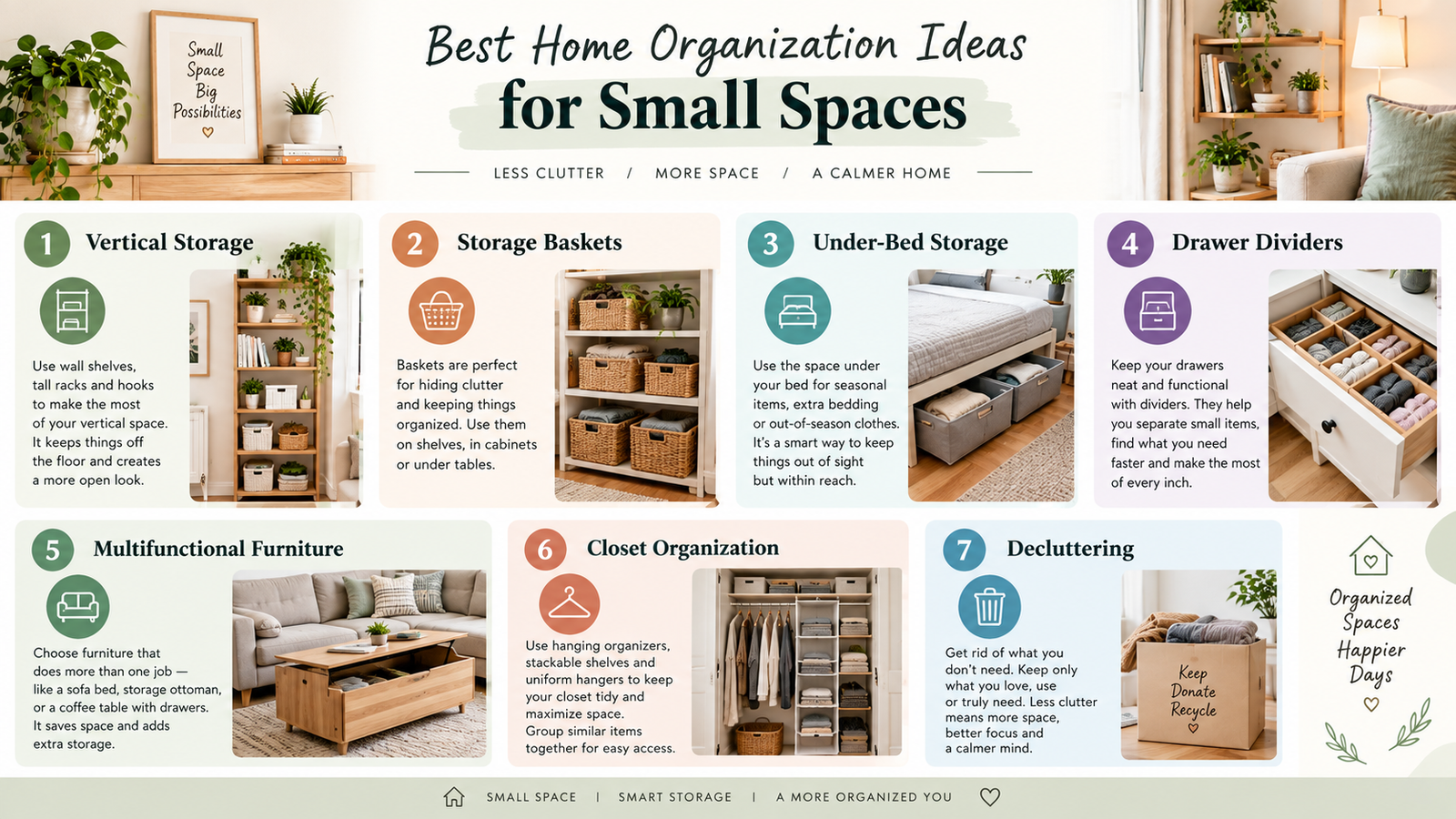
Vertical storage, multifunctional furniture, storage baskets, under-bed containers, drawer dividers, and regular decluttering can all help you create a more organized home.
Start with one small area and make simple improvements over time. With consistent habits and smart storage solutions, even a small home can feel comfortable, functional, and easy to maintain.