
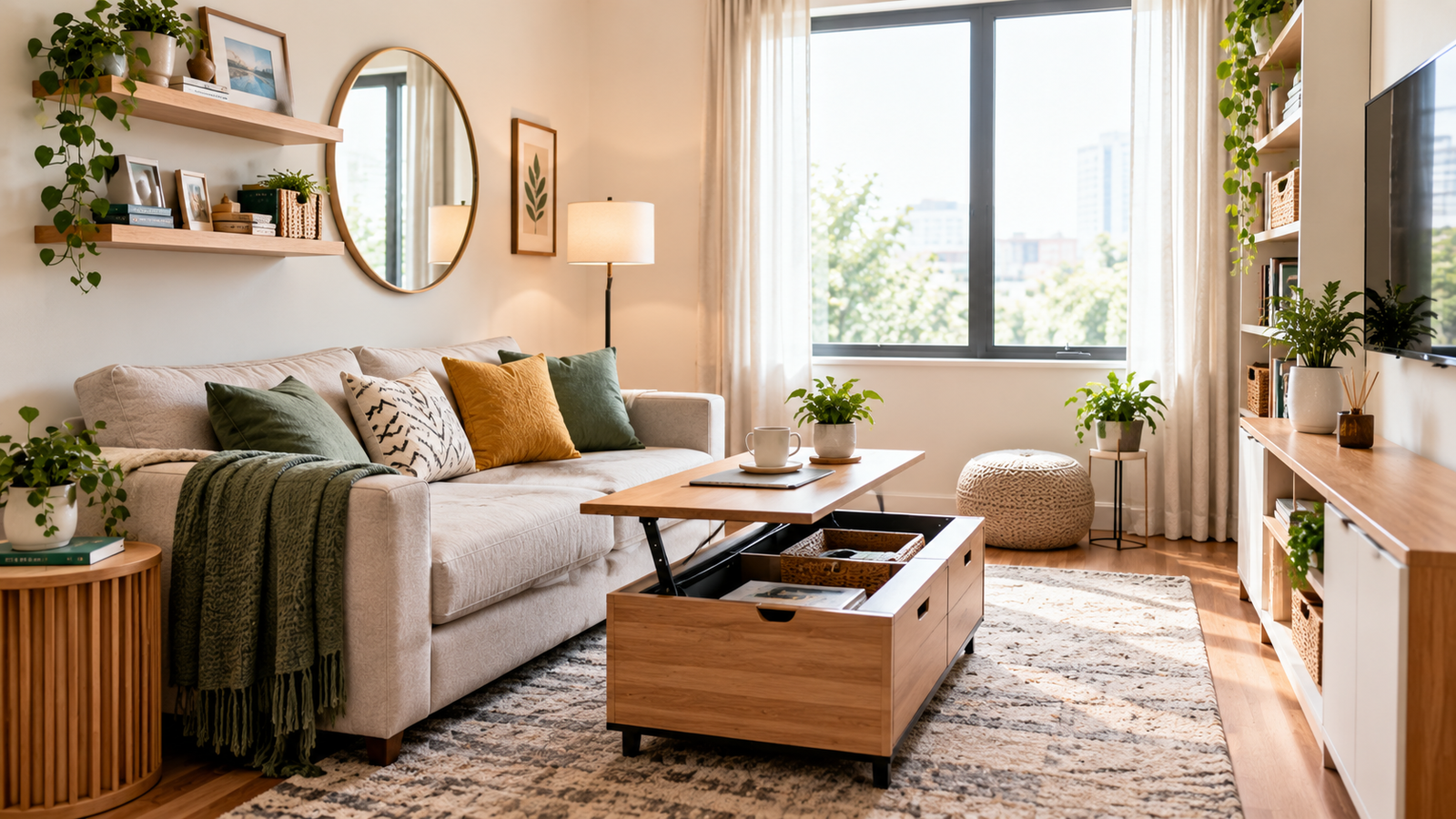
A small living room does not have to feel uncomfortable, crowded, or difficult to decorate. With the right furniture, colors, storage solutions, and layout, even a compact living room can become a comfortable and attractive part of your home.
The key is to make every part of the room useful without filling it with unnecessary items. Instead of trying to fit everything into a small space, focus on choosing furniture and decorations that provide both style and function.
Whether you live in a small house, apartment, or compact family home, these living room ideas can help you make better use of the space you already have.
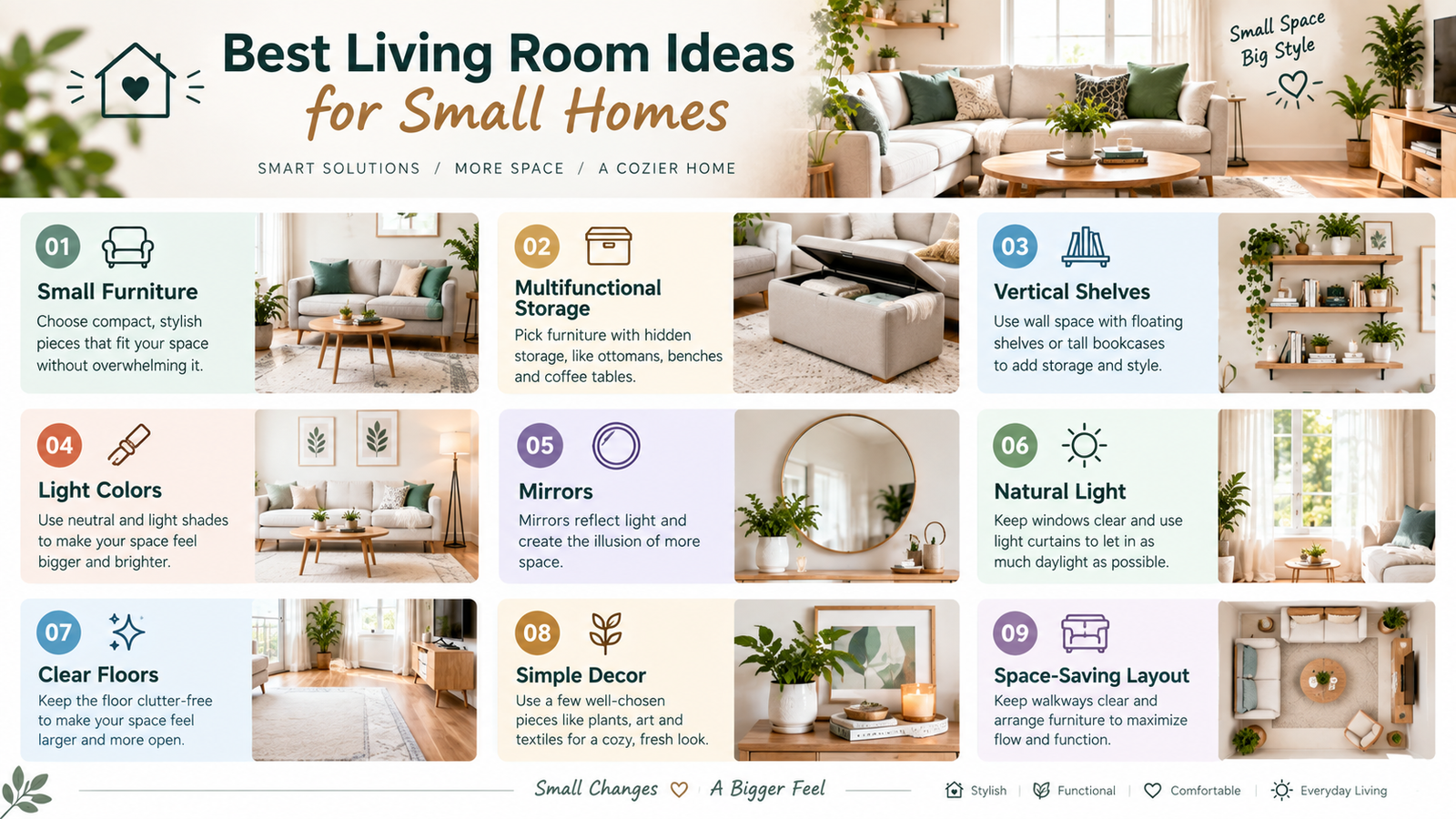
1. Choose Furniture That Fits the Room
One of the most important rules for a small living room is choosing furniture that matches the size of the space.
A large sofa may look comfortable in a showroom, but it can make a small room feel crowded. Instead, consider a compact sofa, loveseat, or smaller sectional that leaves enough walking space around it.
Before buying furniture, measure your room carefully. Also measure doorways, hallways, and entrances to make sure the furniture can actually be brought into the room.
The goal is to create a comfortable seating area without blocking movement.
2. Use Multifunctional Furniture
Furniture that serves more than one purpose can be extremely useful in a small home.
For example, an ottoman can provide seating, act as a footrest, and offer hidden storage. A coffee table with shelves can provide a place for books and accessories. A sofa bed can also provide additional sleeping space when needed.
When choosing furniture, ask yourself whether it can solve more than one problem.
This approach allows you to have the functions you need without adding too many separate pieces of furniture.
3. Make Use of Vertical Space
Small living rooms often have limited floor space, but the walls can provide additional storage and decoration opportunities.
Install floating shelves or wall-mounted storage to keep books, plants, photographs, and decorative items off the floor.
You can also use tall bookcases or cabinets to take advantage of vertical space. Keeping storage higher on the wall can help preserve valuable floor space.
However, avoid covering every wall with shelves. Leave some empty space so the room still feels open.
4. Choose Light and Simple Colors
Color can have a strong effect on how a small room feels.
Light shades such as white, cream, beige, soft gray, and light neutral colors can help create a brighter and more open atmosphere.
You do not have to make everything the same color. Add personality through cushions, artwork, rugs, curtains, or small decorative pieces.
If you prefer darker colors, consider using them as accents instead of covering every wall or large surface.
5. Use Mirrors to Create a More Open Feel
Mirrors can be a useful decorating tool in a small living room.
A large mirror placed opposite a window can reflect natural light and make the room feel brighter. A decorative mirror can also become a focal point on an otherwise empty wall.
Choose a mirror that matches your furniture and overall design.
Avoid adding too many mirrors simply to make the room appear larger. One well-positioned mirror can often be enough.
6. Keep the Floor as Clear as Possible
A crowded floor can make a small living room feel even smaller.
Try to choose furniture that leaves visible floor space underneath or around it. Wall-mounted shelves and cabinets can also reduce the amount of furniture sitting directly on the floor.
Keep unnecessary boxes, bags, cables, and other items out of the main living area.
A clear floor creates better walking paths and makes the room feel more organized.
7. Choose a Smaller Coffee Table
A coffee table can be useful, but a large table may take up too much space.
Consider a compact round, oval, or narrow coffee table depending on your room’s layout. Tables with storage shelves or drawers can provide additional functionality.
Make sure there is enough space between the table and sofa for people to move comfortably.
If the room is extremely small, you can also consider nesting tables or small side tables that can be moved when necessary.
8. Use Furniture With Hidden Storage
Storage is one of the biggest challenges in a small living room.
Furniture with hidden storage can help you keep everyday items organized without making the room look cluttered.
Look for ottomans with storage compartments, coffee tables with drawers, storage benches, or cabinets with closed doors.
Use these spaces for blankets, books, remote controls, games, and other items that you want nearby but do not want visible all the time.
9. Use Curtains Correctly
Curtains can influence the visual size of a room.
Hanging curtain rods slightly higher than the window can create the impression of greater height. Extending the rod beyond the window frame can also allow more natural light into the room when the curtains are open.
Choose curtains that complement your walls and furniture.
For small living rooms, lightweight curtains can help maintain a bright and airy feeling.
10. Let in More Natural Light
Natural light can make a small room feel more open and comfortable.
Keep windows clean and avoid placing large furniture directly in front of them. Use lightweight curtains that can easily be opened during the day.
If your windows receive good sunlight, take advantage of it instead of blocking it with unnecessary decorations.
Natural light can also make colors and furniture look more attractive.
11. Create a Simple Furniture Layout
Furniture placement can make a major difference in a small living room.
Avoid pushing every piece of furniture against the wall simply because the room is small. Instead, create a layout that supports conversation and leaves clear walking paths.
Start with the largest piece, usually the sofa, and then add smaller furniture around it.
Try different arrangements before deciding on the final layout. Sometimes moving a sofa or chair only a few inches can noticeably improve the room.
12. Choose a Simple Rug
A rug can make a living room feel warmer and more comfortable. However, the wrong size or pattern can make a small room feel busy.
Choose a rug that fits the seating area without overwhelming the room.
Simple patterns and neutral colors can work well in compact spaces. If your furniture and walls are already visually busy, choose a simpler rug.
Make sure the rug is positioned securely to reduce the risk of slipping or tripping.
13. Use Wall-Mounted Lighting
Floor lamps can be useful, but they take up valuable floor space.
Wall-mounted lights or sconces can provide lighting without requiring another piece of furniture.
You can also use table lamps on existing side tables if you already have enough surface space.
Use different levels of lighting to create a comfortable atmosphere. For example, combine general room lighting with a lamp for reading or relaxing.
14. Keep Decorations Simple
Decorations can make a living room feel personal, but too many decorative items can create visual clutter.
Choose a few pieces that you genuinely like. A piece of artwork, a plant, a small collection of books, or a few decorative cushions may be enough.
Instead of decorating every surface, create one or two focal points.
This approach keeps the room attractive while maintaining a sense of space.
15. Add Plants Carefully
Plants can bring natural color and life into a living room.
If floor space is limited, use small plants on shelves, side tables, or window areas. Hanging plants can also make use of vertical space.
Choose plants based on the amount of natural light available in your room.
Avoid adding too many plants if they make the space difficult to move through or maintain.
16. Use a Consistent Design Style
A small living room can look more organized when furniture and decorations follow a consistent style.
For example, you might choose a modern minimalist style with simple furniture and neutral colors. Alternatively, you could create a cozy style using warm colors, soft textiles, and natural materials.
You do not need to follow a strict design trend. The important thing is to choose items that work well together.
Too many different colors, patterns, and furniture styles can make a small room feel visually crowded.
17. Create a Small Work or Study Area
If your living room also needs to function as a workspace, choose furniture that does not take up unnecessary room.
A compact desk against a wall can create a practical work area. A wall shelf above the desk can provide additional storage.
Another option is a foldable desk that can be closed or moved when you are finished working.
Keeping the work area organized helps the living room serve multiple purposes without becoming cluttered.
18. Hide Cables and Electronics
Televisions, chargers, speakers, and other electronics can create a messy appearance.
Use simple cable management solutions to keep wires together and out of sight where possible.
Store remote controls in a small basket or tray instead of leaving them scattered around the room.
A cleaner entertainment area can make the entire living room look more organized.
19. Use the Corners Wisely
Corners are often ignored in small living rooms, but they can provide useful space.
A narrow bookshelf, floor lamp, small plant, or corner chair can make an unused corner more functional.
Do not feel that every corner needs furniture, though. Sometimes leaving a corner empty creates valuable visual breathing room.
The best solution depends on the shape and layout of your room.
20. Declutter Regularly
Even a well-designed small living room can become crowded if unnecessary items continue to accumulate.
Take a few minutes regularly to remove things that no longer belong in the room.
Ask yourself whether each item is useful, meaningful, or necessary. If something is rarely used and has no real purpose, consider moving it to storage or removing it from the room.
Regular decluttering helps maintain the improvements you have made.
Common Mistakes to Avoid in a Small Living Room
One common mistake is choosing furniture based only on appearance without considering its size. A beautiful sofa that is too large can make the entire room uncomfortable.
Another mistake is using too many decorative items. Small spaces benefit from thoughtful decoration rather than excessive decoration.
Poor lighting can also make a room feel smaller. Make use of natural light and add practical lighting where needed.
Finally, avoid buying storage containers before determining what you actually need to store. Organizing clutter without removing unnecessary items can simply create more containers rather than more useful space.
How to Make a Small Living Room Feel Bigger
You do not necessarily need to physically increase the size of your living room to make it feel more spacious.
Start by reducing clutter and creating clear walking paths. Use appropriately sized furniture and take advantage of vertical storage.
Light colors, mirrors, natural light, and simple window treatments can also contribute to an open feeling.
Most importantly, avoid filling every available space. Empty areas are not wasted space; they can help the room feel balanced and comfortable.
Final Thoughts
A small living room can be stylish, comfortable, and functional when you make thoughtful choices about furniture, storage, lighting, and decoration.
Start by measuring your space and identifying the biggest problems. Then choose practical solutions such as multifunctional furniture, vertical storage, mirrors, simple colors, better lighting, and regular decluttering.
You do not need a large budget or a complete renovation to improve a small living room. A few well-planned changes can make the space easier to use and more enjoyable every day.