
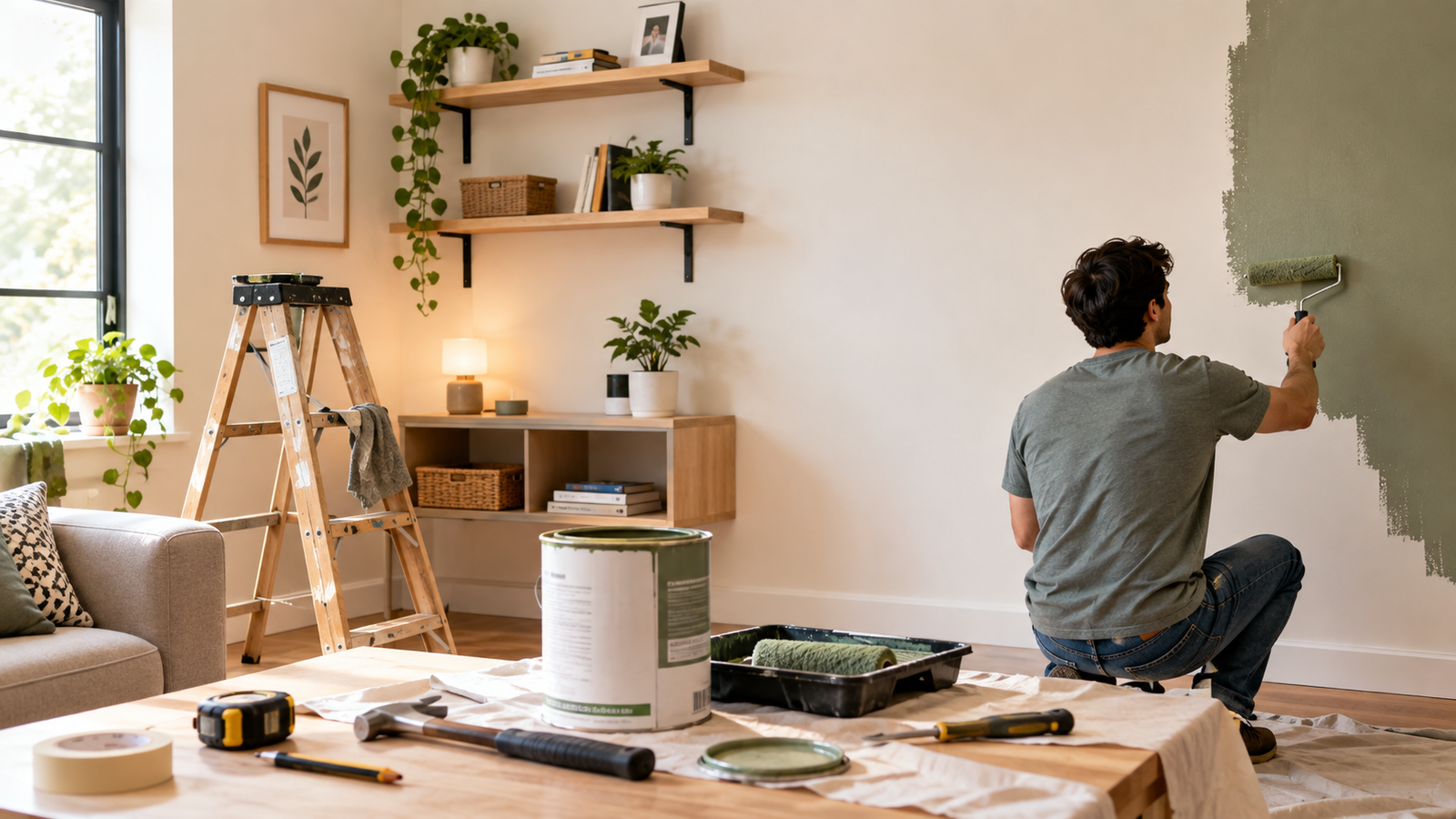
Improving your home does not always require a large budget, professional contractors, or major renovations. Many simple home improvement projects can make a noticeable difference in how your home looks, feels, and functions. If you are a beginner, starting with small projects is a practical way to build confidence while improving your living space.
Whether you live in an apartment, a small house, or a larger home, there are plenty of affordable projects you can complete over a weekend. A fresh coat of paint, better lighting, new cabinet handles, or organized storage can completely change the appearance of a room.
In this guide, we will explore easy home improvement ideas for beginners that are practical, affordable, and suitable for different parts of your home.
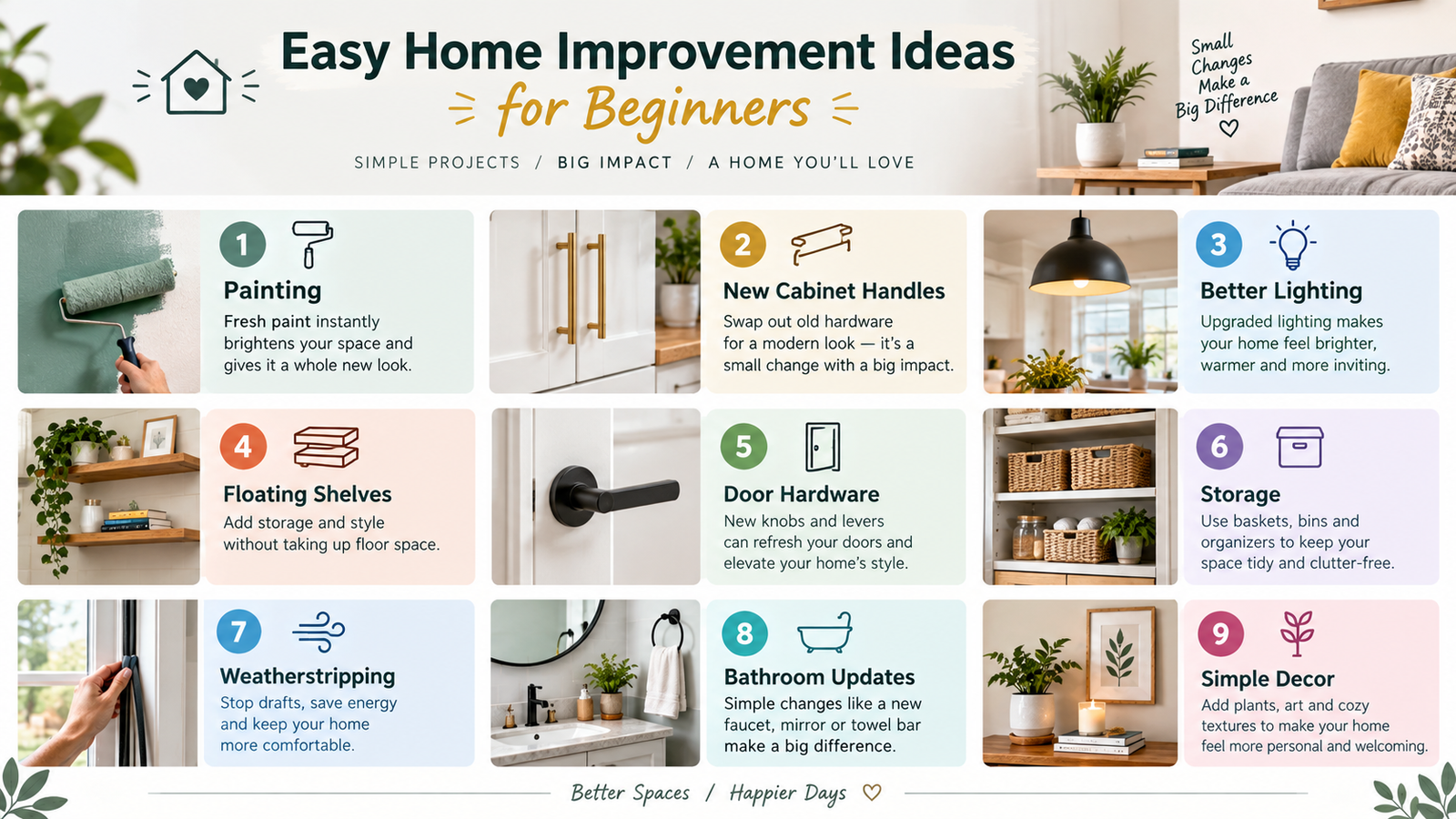
1. Give Your Walls a Fresh Coat of Paint
Painting is one of the easiest ways to change the appearance of a room. You do not need to repaint your entire home. Start with one room or even one accent wall.
Choose a color that matches your existing furniture and decor. Light colors can make smaller rooms feel brighter and more open, while warmer shades can create a comfortable atmosphere.
Before painting, clean the wall and cover your floors and furniture. Use painter’s tape around windows, doors, switches, and other areas that should remain paint-free.
A clean paint job can make an older room look fresh without requiring expensive changes.
2. Replace Old Cabinet Handles
Small details can have a surprisingly large impact on your kitchen, bathroom, or storage furniture. Replacing old cabinet handles and drawer pulls is a simple project that most beginners can handle.
Choose handles that match your home’s style. Modern handles can give older cabinets a more contemporary appearance, while traditional hardware can create a classic look.
Before buying new hardware, measure the distance between the existing screw holes. This helps ensure that the new handles fit properly.
This project is inexpensive compared with replacing entire cabinets, but it can still make your kitchen or bathroom feel updated.
3. Improve Your Lighting
Good lighting can change the atmosphere of almost any room. If a room feels dark or uninviting, consider improving its lighting before making more expensive changes.
Start with simple options such as brighter bulbs, table lamps, floor lamps, or under-cabinet lighting. You can also use different types of lighting for different purposes.
For example, a desk may need focused lighting for work, while a living room may benefit from softer ambient lighting.
If you plan to replace electrical fixtures that require wiring, turn off the power and follow appropriate safety procedures. If you are unsure about electrical work, it is better to hire a qualified professional.
4. Add Floating Shelves
Floating shelves can improve both storage and decoration. They are particularly useful in small homes where floor space is limited.
You can install shelves in a living room, bedroom, kitchen, bathroom, or home office. Use them to display books, plants, photos, small storage baskets, or decorative items.
Before installing shelves, check the wall type and use appropriate mounting hardware. Avoid placing heavy objects on shelves unless they are properly secured.
A few well-placed shelves can make an empty wall more useful while keeping the room organized.
5. Upgrade Your Door Hardware
Doors are used every day, but their hardware is often overlooked. Replacing outdated door handles, knobs, or hinges can give your home a small but noticeable upgrade.
Choose hardware that works with the existing style of your home. Matching hardware throughout the house can also create a more consistent appearance.
If you are replacing a door handle, keep the original hardware nearby until the new one has been installed successfully.
This is another beginner-friendly project that can usually be completed with basic tools.
6. Improve Your Home’s Entryway
The entryway is the first area people see when they enter your home. It does not need to be large or expensive to look organized.
Add a small shoe rack, wall hooks, a mirror, or a simple storage basket. A small bench can also provide a convenient place to sit while putting on shoes.
Try to keep the entryway free from unnecessary items. Giving keys, shoes, bags, and coats a designated place can make the area feel cleaner.
Even a small entryway can become more functional with a few simple changes.
7. Install Weatherstripping Around Doors and Windows
Small gaps around doors and windows can allow outside air to enter your home. Weatherstripping is a simple way to improve the seal around these areas.
Begin by checking doors and windows for noticeable drafts. Choose weatherstripping that is appropriate for the specific location and follow the manufacturer’s installation instructions.
This is a relatively inexpensive maintenance project and can also make rooms feel more comfortable.
If you notice significant drafts, water damage, or structural problems, investigate the underlying issue instead of simply covering the gap.
8. Refresh Your Bathroom
You do not need to completely renovate your bathroom to make it look better. Small updates can create a cleaner and more modern appearance.
Replace an old shower curtain, add matching storage containers, change cabinet hardware, or install a new mirror. You can also organize toiletries so that countertops remain clear.
Fresh towels and simple accessories can also make the room feel more inviting.
When working around plumbing, shut off the water when required and make sure connections are secure. For major plumbing problems, professional assistance may be necessary.
9. Add Better Storage Solutions
Poor storage can make even a beautiful home feel cluttered. One of the easiest improvements is to make better use of the storage space you already have.
Add baskets to open shelves, drawer organizers to kitchen cabinets, or small bins to closets. Vertical storage can also help you use wall space instead of taking up more floor space.
Before buying storage products, measure the area carefully. This prevents you from purchasing containers or shelves that do not fit.
Good storage should make everyday items easier to find, not simply hide clutter.
10. Update Your Curtains and Window Treatments
Windows have a major effect on the appearance of a room. Replacing old curtains or blinds can instantly give a space a refreshed look.
Choose curtains that complement your walls and furniture. If you want a room to feel larger, hanging curtains slightly higher and wider than the window can create a more spacious appearance.
Make sure the curtain rod and mounting hardware are appropriate for the wall and the weight of the curtains.
This is a simple improvement that can change the overall style of a bedroom, living room, or home office.
11. Create a Small Outdoor Improvement
If you have a balcony, patio, porch, or small outdoor area, you can improve it without spending a lot of money.
Start by cleaning the space and removing unnecessary items. Add a few comfortable outdoor accessories, potted plants, or simple lighting.
A small seating area can make an unused outdoor space more practical. Choose weather-appropriate materials and keep the design simple.
You do not need a large garden to create an enjoyable outdoor area.
12. Improve Your Flooring Without Replacing It
Replacing flooring can be expensive, but you can improve the appearance of existing floors in simpler ways.
Start by giving the floor a thorough cleaning appropriate for its material. Add an area rug to define a space, provide comfort, and introduce color or texture.
For wooden floors, use cleaning products designed for the specific finish. Avoid excessive water or unsuitable cleaners that could damage the surface.
A clean floor combined with a well-placed rug can make a room look noticeably better without a full renovation.
13. Organize Your Kitchen Countertops
A kitchen can look much cleaner when countertops are free from unnecessary items.
Start by removing everything from the counters. Keep only the appliances and items you use regularly. Store less frequently used equipment inside cabinets or a pantry.
You can also add a small tray for frequently used items such as cooking oils or spices.
The goal is not to remove everything but to create a practical workspace that is easy to clean.
14. Add Simple Decorative Touches
Home improvement is not always about repairs. Small decorative changes can also make your home feel more comfortable.
Add framed artwork, family photos, plants, decorative cushions, or a simple centerpiece. Choose a few items that complement each other instead of filling every available surface.
Plants can also add natural color and make a room feel more welcoming. If you do not have enough natural light, choose plants that are suitable for the available conditions.
Keep decorations balanced so that the room remains comfortable rather than crowded.
15. Improve One Room at a Time
One of the biggest mistakes beginners make is trying to improve the entire house at once.
Instead, choose one room and make a simple plan. Identify what bothers you most about the space and focus on improvements that address that problem.
For example, if your bedroom feels cluttered, start with storage and organization. If your living room feels dark, focus on lighting and window treatments.
Working one room at a time makes projects easier to manage and prevents unnecessary spending.
How to Start Your First Home Improvement Project
If you are completely new to home improvement, follow a simple process.
First, choose a small project that can realistically be completed in a few hours or a weekend. Next, create a basic budget and make a list of the tools and materials you need.
Measure your space before buying anything. Read the instructions for products and tools before using them.
It is also helpful to prepare the work area before starting. Move furniture, protect surfaces, and keep your tools organized.
Most importantly, do not rush. A simple project completed carefully will usually look better than a complicated project completed too quickly.
Common Beginner Home Improvement Mistakes
Beginners often make a few avoidable mistakes. One common problem is buying materials before measuring the space. Another is choosing a project that is too complicated for their current skill level.
Skipping preparation can also create problems. For example, painting without properly protecting floors and furniture can result in unnecessary cleanup.
Safety is equally important. Wear appropriate protective equipment when needed, use tools according to their instructions, and avoid electrical, structural, gas, or major plumbing work unless you have the required knowledge or professional help.
A good beginner project should improve your home while also helping you develop practical skills.
Final Thoughts
Easy home improvement projects can make your home more comfortable, attractive, and functional without requiring a major renovation.
Start with simple changes such as painting a wall, replacing cabinet handles, improving lighting, adding shelves, organizing storage, or updating curtains. These small projects can create visible improvements while helping you become more confident with basic home maintenance.
You do not need to complete everything at once. Choose one area, create a realistic budget, prepare properly, and work carefully. Over time, small improvements can make a big difference in the way your home looks and feels.